Showing posts with label folk. Show all posts

Wednesday, January 21, 2009

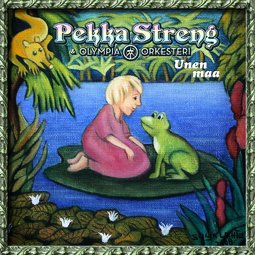
Pekka Streng: Unen maa (CD)


Artist: Pekka Streng & Olympia-Orkesteri
Title: Unen maa
Format: CD
Publication code: 50999 694030 2 6
ICPN number: 50999 694030 2 6
Date: 21 January 2009
Record label: EMI Finland

Tracklist:

1. Noidat ("The witches")
2. Sinua ikävöin ("I miss you")
3. Olen rakastunut ("I'm in love")
4. Olet onnellinen ("You're happy")
5. Aapeli ("Abel")
6. Metsästäjä ("The hunter")
7. Sammakko Sim ("Sim the frog")
8. Topi Jäppisen koti ("The home of Topi Jäppinen")
9. Itsemurhatalon luona ("By the suicide house")
10. Suruperhonen ("The butterfly of sorrow")
11. Keijut ("The elves")
12. Sinä aamuna ("That morning")
13. Kohtalo ("Fate")
14. Muumipeikon tassuttelu ("The treading of Moomintroll")
15. Luumupuupoika ("The plum tree boy")

Pekka Streng (26 April 1948 - 11 April 1975) was a Finnish artist whose recorded music was a combination of folk and psychedelia with some jazzy flavour and occasional electronic experimentation. He died of cancer only two weeks before his 27th birthday, but his two albums, Magneettimiehen kuolema ("The Death of Magnet Man", 1970) and Kesämaa ("Summerland", 1972), have assured him a huge posthumous cult following and influential position even among those fans who hadn't been born at the time of his death. Pekka Streng's mystique is increased by the fact that he avoided publicity all his life, giving only one interview, which was published after his death in 1978.

Many artists of the current Finnish psychedelic folk/"New Weird of Finland" scene, such as Sami Sänpäkkilä of Es and Fonal Records, have openly admitted their debt to Pekka Streng. Also Sähkö Recordings' sublabel Jazzpuu re-released in 2001 as a 12" the original and extended versions of Streng's posthumous "cult hit" 'Puutarhassa' ("In the garden"), a jazzy and bossanova-like song out of Kesämaa. (Though the biggest fan favourite by Pekka Streng still remains 'Sisältäni portin löysin', "I found a gate inside me", an esoteric-psychedelic inner journey folk excursion out of Magneettimiehen kuolema).

In the late 1960s Pekka Streng was an active member of Ylioppilasteatteri, Helsinki's Student Theatre, appearing among all as one of the extras of Risto Jarva's science fiction film Ruusujen aika (1969). 1969 was generally a busy year for Pekka Streng: his ten-part radio play adaptation of J.M. Barrie's Peter Pan premiered for YLE in January-February, the same year his two other radio plays were aired: Papiljonttinainen ("The curler woman"), which was meant for children, and the psychedelic collage Kreivi von Krolockin hymyn variaatiot ("The variations of Count von Krolock's smile"), both based on Streng's own texts and featuring also his songs. Furthermore, 1969 saw the release of Streng's first single, 'Pieni juhlija' ("A small partygoer"; out of Tove Jansson's poem), recorded with the band called Ellipsi for Love Records, which were also to publish Pekka Streng's two legendary albums.

The subjects of Pekka Streng's music, with its tender folk leanings, concentrate on fairy tales, Eastern mysticism and spiritualism, social criticism and so on, with a strong humanist emphasis. On his first album, Streng was backed by the musicians of the Finnish prog-rock band Tasavallan Presidentti, and the second -- more lavish in its jazzy orchestration -- had on it some of the best jazz and rock musicians in Finland.

Unen maa ("The land of dream") consists of the demo material meant for Streng's planned third album, which never materialized during the artist's lifetime. The earliest songs originate from the late 60s, the latest apparently from 1973 and 1974. These demo recordings have been the Streng family's property since Pekka Streng's demise in 1975. It took over three decades and an enormous amount of background work and lobbying from the admirers of the late artist (such as the journalist Suonna Kononen and documentary film director Arto Halonen) until Pekka Streng's son Joonia Streng, now working as a lawyer, gave green light to the publication of the material and EMI of Finland took interest.

Unen maa has 15 previously unreleased Pekka Streng songs; two of them in their original form, the rest as versions arranged by producer Jukka Hakoköngäs and Olympia-Orkesteri out of the original monophonic reel-to-reel demos by Pekka Streng. The demo recordings featured only Streng's vocals and guitar to which Olympia-orkesteri added other instrumentation, after environmental noise had been removed from the tapes.

The sleeve art of Unen maa is by Sonja Lehto, Pekka Streng's sister, who also designed the covers for his Magneettimiehen kuolema and Kesämaa albums.

Arto Halonen is working on a documentary film on Pekka Streng, due autumn 2009.

Personnel on Unen maa:

  • Pekka Streng: vocals, guitar

  • Jukka Hakoköngäs: grand piano, "Aunt Bertha" B3, Nord Wave, Nord 2X, Prophet '08, Moog Voyager, Mopho, percussion, guitar, bass
  • Anssi Nykänen: drums, percussion
  • Jarno T. Karjalainen: bass
  • Timo Kämäräinen: guitars, vocals
  • Jukka Perko: soprano saxophone

    Unen maa info in Finnish @ EMI Finland
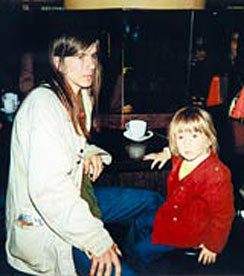


    Pekka Streng with son Joonia


  • Pekka Streng - a tribute site in Finnish

  • Pekka Streng discography @ Discogs

    Articles in Finnish:

  • Lauluja haudan takaa @ Karjalainen

    Pekka Streng audio & video links:

  • Memories of Pekka Streng: one audio clip and one video clip @ YLE Elävä Arkisto
  • Audio excerpts of Pekka Streng's radio plays @ YLE Elävä Arkisto

  • Pekka Streng search results @ YouTube

    Additional material @ pHinnWeb:

  • Psychedelic music (and garage rock) in Finland
  • The Early Years of Finnish Electronic Music & Avantgarde
  • Friday, May 19, 2006

    I Don't Live In A Forest


    The mystical forests of Tampere for you

    Talking about hivemind thinking. As I've already written in this blog, lately international music fanzines have gotten hold of Finnish avantgarde-folk-improvisation scene (one example here). What especially has amused me has been hearing the Yankee critics in their reviews spouting freely such ridiculous phrases as "the mystical forests of Tampere". The emphasis here is apparently on Finnish "exotica" style of idyllic rural landscapes, forests, elves and stuff, as imagined and fantasized by someone who has never been here. (Hell, I've heard in this context even some talk about fjords -- those exist in Norway, not in Finland!) Well, I guess there are as many different Tamperes as are people there. I used to live in its suburbs of Kaukajärvi and Hervanta, which were both a combination of concrete blocks of flats and forests. Now I live in mid-town, and the most I see during its long dark winters and rainy summers is dirty snow and slush, factories spewing out vapour trails, porno shops, white B-boys and hooded teenagers strolling around with bottles of beer in their hands, goths, senior citizens in their garish shellsuits, winos bumming money, darkness descending mid-afternoon during winters, and general bleakness amidst the yearly seasons of sub-arctic hysteria. Maybe I should relocate to suburbs, double my Prozac intake or drink more elf's pee.

    Anyway, this new folk craze is clearly a product of the post-9/11 shell-shocked mindset. People obviously want escapism, a retreat from the ugly world of power politics, numbing mass culture, globalisation on the terms of the rich people only, general alienation and blah blah. I can detect a sort of regression to childhood in this scene, in its music and artwork on the records. People sitting on the floor playing acoustic guitars and toy instruments, creating noodling improvisations (now, musical improvisation is one of the hardest games there is; only very few musicians can do it with some skill: otherwise it will become only pointless free-for-all and disappear up its own rearhole). All very lo-fi, acoustic, "authentic", "natural" and "free". The days of hippiedom are here again. Everyone so sweet and innocent. All this reeks to me of a sort of cosy self-indulgence, which was mercifully kicked out by the late 70s punks. Perhaps we would need in music something like punk; not "punk" as it is presented to us by such pathetic retro-style bands like Green Day, but a similar attitude that the original punk had, which would have the 21st sound (not boring three-chord guitar sounds), would fit to and reflect the current mental landscape.

    I used to see some of these artists and their gigs, clapped my hands politely, but for me "forest folk" has worn out its welcome. (And what the hell is "folktronica"? A monster obviously invented by trendy music critics, a contradiction in terms!) It doesn't speak to me about the world as I see it, things I can detect happening around me. I've got nothing against escapism: hell, I retreat to it myself all the time, but it makes me guilty too, since I believe (though are far from living these ideals myself) in such old-fashioned concepts as social conscience and even the responsibility of artist's social commentary. You can hide in your little circle of people like Finnish forest folkers do and pretend the global ugliness doesn't exist, but I don't want to and I can't run away from the world, and live in some mythical twilight fantasy forest.

    ---

    Some Google search results with the words "forest" + "folk":

    1 | 2 | 3

    Thursday, November 24, 2005

    Thursday, November 17, 2005

    Fffolk Vs. Electronicszzz

    On his blog Voltage, Max Clarke a.k.a. Maxx Klaxon raises some interesting points about the current folk revival.

    As someone who subscribes to ooooo mailing list (the home of Finnish marginal and eclectic music, among all with most of those folk(s) belonging to the "New Weird of Finland" movement lauded in The Wire and international zines) and has followed what people like Kemialliset Ystävät are doing, I find this quite interesting. I might argue that what I find myself attracted to in this sort of music (often called "psychedelic folk" or "New Weird of...") is not the fact that it is created with acoustic instruments but the overall spirit of experimentation that is found there: all those weird sounds and otherworldy ambience. Those are not exactly traditional strumming acoustic guitar by campfire sounds, but something totally creating a world one can call its own. Then, I'm not familiar myself with most of the other artists belonging to this alleged "new folk" genre, e.g. Devandra Banhart, so I can't really comment this style in general.

    Musical "fashions" repeat themselves in cycles and have a tendency to reflect the general Zeitgeist: in unsure times people obviously have a need to return to the "roots", to what is "safe", "tried and true". Even then, musical experimentation and seeking for what is "new" is bound to go on somewhere in the margins.

    To throw more gasoline in the flames: how much there is that is actually "new" in current electro(nic) music, and how much of that is only recycling what was already done in the 1980s?

    Anyway, this seems to me to be another revival of the age-old confrontation between "authentic", "natural", "down-to-Earth" acoustic/rock music and the "artificial", "unnatural", "unauthentic" electronic (dance/listening) music; of which I grew up tired years ago after countless "it is/it isn't" type of arguments which proved totally unfruitful and counterproductive in the end. Doesn't it only boil down to subjective tastes, personal likes and dislikes? An artist tries to make most of those instruments and resources at his/her disposal, whether they were acoustic or electric guitars, violins, flutes, kazoos, washboards, Moog synths, Roland's x0x series, MAX/MSP, empty oil barrels or rubber bands. In the end it's creativity that counts, not the means to reach that end result.

    Tuesday, April 19, 2005

    New Weird of Finland @ Pitchfork -- Arttu Mouths Off


    There's an interview/scene primer at Pitchfork Media about this so called New Weird Of Finland scene, meaning bands and labels concentrated on experimental-psychedelic-folk-freejazz-improvisation type of music. If you have followed The Wire magazine or some more underground type of music publications lately, you must have noticed that this is the hottest thing in music coming out of this country now, and not any more the minimal electronic music of Pan sonic or Mika Vainio (well, that's just their opinion).

    As noted in the Pitchfork story, though, you can snicker any time when you can hear some of these non-Finnish journalists using the notorious term "the mystical forests of Finland", or especially "the mystical forests of Tampere", since this town consists more of dusty red-brick factories and smokestacks than of any hippie-ish pastoral idylls (as evidenced here and here). Tampere's suburbs and surroundings are a different thing, though... (Not to talk about my own personal vision of the Tampere town...)

    Anyway, here's a funny excerpt from the interview:


    "Many [early Finnish musicians] were technologically oriented; it was all about the new wonderful computers," says Arttu Partinen of Avarus, noisy jazz monsters Hetero Skeleton, and the Lal Lal Lal label. "Some such as Erkki Kurenniemi have futuristic utopias about computers taking over, and [that] being a good thing. After hearing one of Kurenniemi'a lectures, I decided I didn't want to have anything to do with his music."


    Tsk tsk, Arttu... well, but before you jump into any conclusions, I know Arttu (the pic above) and like the guy; and even though we've had our different opinions on electronic music in the past, I've done some collaboration with him, DJed at his great Mental Alaska club, and his Lal Lal Lal will also soon release '(I Ain't No) Lovechild', the first 7" of our Kompleksi project. (Plus there will be another big project where both and Arttu will participate in, but you will only hear about it later.) In fact, if there is any local underground music scene, for me, Mr. Arttu Partinen is one person to whom you may say it personifies in.

    ---

    Well, more Arttu's (and other Finns' adventures at Glasgow's Subcurrent festival in April 2005, as written down by David Keenan in his Wire diary:


    "Backstage Partinen is drunk as hell and in everybody's face. He corners Nolan with the news that Virgin Eye Blood Brother suck. Nolan stays cool and shrugs it off, despite Partinen comparing them to '80s indie shoegazing'. It's only when he starts muttering about 'dudes' to himself and how he's gonna blow Wolf Eyes off-stage that Mike Bernstein of Double Leopards shoots me a look that says, this guy may end up on the pavement before the night's out. It's getting sweaty back here."

    "Everyone has been waiting for Avarus -- Partinen won't let anyone forget them -- and they don't disappoint. Although there are extended sections of surreal gonzo humour (with Partinen spending long, uncomfortable minutes mock-masturbating an inflated balloon) when they do kick in they have all of the monumental, lumbering power of Silence-era groups like International Harvester. Kemialliset Ystävät -- like Es before them -- sound pretty different from what they do on record, with a ragged, loose quality to their sound that seems inspired as much by the interstellar improvisations of Syd-era Pink Floyd as much as UK free-form groups like The A-Band and Vibracathedral Orchestra."

    "Suddenly The Fins are on the floor -- as well as some un-named guy who has cut his hair like Thurston Moore and who keeps running over to the deck and shaking his fist in the air -- and it's then that Niko-Matti Ahti drops in the moves that make his name at the fest, shaking his ass with the kind of abandon rarely seen in public. They send in the security to ask him to dance 'more sedately'. They know he's dangerous."

    Monday, September 27, 2004

    Mental Alaska And The New Weird Of America


    (Arttu Partinen and Jan Anderzén of Mental Alaska club)


    Exposing the idea of conventionally linear time and associated moments of progress and modernity as an essentially arbitrary, artificial construct was always a key part of the psychedelic experience. It's no surprise, then, that from this vantage point, the way psychedelic music has developed seems almost ass backwards. As part of the never-ending quest for a vibration so deranging that it would unhinge your skull for good, the most exploratory of today's psychedelic musicians -- Tower Recordings, NNCK, Vibracathedral Orchestra -- have arguably regressed, abandoning technocratic modes and secondhand signifiers ('technique', wah-wah pedals, sometimes even electricity) in favour of going caveman. In place of the marriage of superhuman technique and outlaw noise pioneered by first generation cosmonauts like Jimi Hendrix and The Grateful Dead, wordless vocals, atonal acoustic jams, free percussive punk-outs and an approach to structure primarily informed by the huge ensemble waves generated by Sun Ra, John Coltrane and Albert Ayler's orchestras now dominate. The music has come full circle, a marriage of avant garde and savage mind birthing, a primal music that is formally precocious. It really isn't about the notes anymore.
    - David Keenan in The Wire review for Alkuhärkä by Kemialliset Ystävät


    Last night the local Mental Alaska club had from the States Black Forest/Black Sea, Fursaxa, Christina Carter, and the local act Avarus ("avaruus" is the Finnish word for "space", they only spell it with one "u"); combining folk, psychedelia, drone and improvisation. Black Forest/Black Sea visited Mental Alaska already last year. The duo of Jeffrey Alexander and Miriam Goldberg, playing guitar and cello respectively, did some serene songs, which got properly freaked-out in the end. Avarus did a Sun Ra/Godz type of improvisation stuff with some suitably silly sounds. Fursaxa and Christina Carter I liked the most, they're both one-woman acts and with very good vocals. A Native American-looking Fursaxa sang in a very strong voice (a psychedelic Joan Baez for the 21st century?) and played maracas(?) and strummed chords from her guitar, also playing and singing along to pre-recorded droney sounds and vocal harmonies, which sounded a bit like Gregorian chants, some of it very ambientish and quite mystical. I liked it very much, unlike two hicks sitting next to me who couldn't get it and also had to comment it all the time Beavis and Butthead-like ("this seems to be a freak night", "this is so 70s", etc.) To my relief it was finally too much to them, and they left. After the gig I bought from Jan of Kemialliset Ystävät, who was selling tickets, two of Fursaxa's CDRs, The Cult From Moon Mountain and her latest, Amulet. Very sublime. Christina Carter was also lovely, singing with an angel-like voice (somehow I started to think of Hope Sandoval of Mazzy Star) and playing psychedelic chords with her guitar. I would also have liked to have gotten her CD, but unfortunately I was out of money by that time. Well, c'est la vie. A big hand to Mental Alaska guys Arttu, Jan & co. for bringing these artists to Finland. Kulttuuriteko.

    Saturday, May 29, 2004

    Folk Is Not Hippie Music Any More

    Here are some interesting Net articles on the connections between "neo-folk", gothic, dark wave and industrial subcultures, and their connections to extreme right-wing. Nazis were known for their interest for pagan mysticism and anything "völkisch". Rock'n'roll is based on black (African-American) musical styles of rhythm'n'blues, blues and jazz; therefore it's not suitable listening for any self-respecting racial bigot. But of course, it would not be justified to claim that being a fan of any musical style or interest in ancient mythologies or paganism would make anyone a fascist sympathizer or racist; just some interesting facts telling something about the dark undercurrents of the culture we're living in.

    http://media.hyperreal.org/zines/est/articles/freedom.html

    http://www.guardian.co.uk./weekend/story/0,3605,839755,00.html

    http://www.morbidoutlook.com/nonfiction/articles/2003_10_notclothes.html

    http://www.morbidoutlook.com/nonfiction/articles/2003_11_notclothes.html

    http://d-a-s-h.org/dossier/05/05_gothic-en.html

    http://www.laweekly.com/ink/printme.php?eid=41247

    http://www.searchlightmagazine.com/stories/MusicMaims.htm

    The punk-rockers such as Siouxsie Sue and early industrial music-makers such as Throbbing Gristle used the emblems of Nazism purely for their shock value, but the ambivalence there was subsequently lost on some people. The Who's drummer Keith Moon loved to dress in a Nazi uniform, David Bowie is claimed to have given a Nazi salute to his fans (this was during his muddled 70s cocaine period) but probably both of these artists would have been shot or sent to concentration camps in the 1930s and 40s Germany: real totalitarian ideologies do not tolerate any free-thinking, mischievous non-conformists. Which is what these youth subcultures are basically all about. Another paradox of democracy is that you're free to disagree with those very ideas of democracy, equality and tolerance as much as you will and form your own opinion (even as misguided from the point of majority that would be) -- it would not be the case in an actual totalitarian state.