Showing posts with label psychedelia. Show all posts

Friday, June 26, 2009

Sky Saxon of The Seeds (1946* - 2009)


The Seeds: 'Pushin' Too Hard' (1967)


The Seeds: 'Mr Farmer (1967)


The Seeds: 'Can't Seem To Make You Mine


The Seeds: 'Two Fingers Pointing on You' (off Psych-Out, directed by Richard Rush, 1968)

Sky "Sunlight" Saxon, the singer and leader of the seminal psychedelic garage rock band The Seeds died on Wednesday 25 June 2009.

* He was reported to be 63 years old, though some sources differ on his actual age.

  • Obituary @ L.A. Record
  • Monday, June 01, 2009

    Jorma Elovaara Interview @ Ylioppilaslehti


    Namechecking also pHinnWeb's Jorma Elovaara tribute page, Ylioppilaslehti of 15 May 2009 features a brand new Elovaara interview by Perttu Häkkinen (a.k.a. Randy Barracuda of Imatran Voima):

    http://www.ylioppilaslehti.fi/2009/05/15/saapasjalkamies/

    Friday, January 23, 2009

    S.H.I.E.L.D. Art by Steranko


    The very first issue of Nick Fury's own title with psychedelic lettering and patterns.


    The "S.H.I.E.L.D. Origin Issue", with some OP art designs.


    A striking science fiction cover; too bad the story inside was not by Steranko and had nothing to do with the sleeve art.


    A surrealist art-inspired cover also reminiscing the films of Alfred Hitchcock (who, in fact, collaborated with Salvador Dalí for Spellbound.)

    Through Facebook, I recently got hooked up again with Canadian Tony Robertson, who maintains an excellent tribute site to American comic book artist and illustrator Jim Steranko. As a fan of the artist's work, I used to host my own Steranko tribute under pHinnWeb during the late-90s, but eventually gave up the site (partly because of worrying about the copyright issues) and let Tony "adopt" for his own site the Steranko-related material I had gathered together so far (including the 1983 Amazing Heroes and 1989 Betty Pages feature stories on Steranko).

    James "Jim" Steranko (b. 1938), known in the industry only as Steranko, is best known for his take on the Marvel Comics character Nick Fury -- who started his life as a WWII hero Sgt. Fury, now promoted to the rank of Colonel as the head of a spy organization S.H.I.E.L.D., wearing a futuristic jumpsuit and also rejuvenated with a mystical youth serum -- which started in 1965 through Strange Tales magazine; the character receiving his own title, Nick Fury: Agent of S.H.I.E.L.D, in 1968. S.H.I.E.L.D. (Supreme Headquarters International Espionage Law-enforcement Division) was inspired by other fictional spy organizations like U.N.C.L.E. (of the TV show Man from U.N.C.L.E.), when Marvel Comics decided to jump in to the secret agent craze popular in the mid-60s after the phenomenal success of James Bond movies.

    For Nick Fury, Steranko developed a totally new flashy narrative style he called "Zap Art", based on the groundwork made by Marvel stalwart Jack Kirby and then further inspired by psychedelia, OP art and surrealism. Marvel Comics titles such as The Fantastic Four and Dr. Strange had already appealed to the hippie generation with their spectacular cosmic visions, and Steranko was consciously to apply to his own works the psychedelic visual style familiar from the rock posters and record covers of the era. Also Will Eisner's Spirit and Eisner's cinematic photomontage-like style of "consequential art" informed Steranko; furthermore, the influence of classic comic book illustrators like Hal Foster of Prince Valiant (large splash pages with long descriptive text captions) and Russ Manning's (Tarzan and Magnus, Robot Fighter) fantasy landscapes were there, also Wally Wood's striking style Wood used in his horror and sci-fi comics. As a writer Steranko ofter favoured elliptical narratives with theatrical pulp fiction style drawing inspiration from hard-boiled crime fiction, sci-fi and even Gothic horror style.

    Steranko, who also had worked as a stage magician, was fascinated by all sorts of games and complicated labyrinth designs, so Nick Fury was seen adventuring in several intricate (and psychedelic) mazes the arch-villains like Hydra had set up for him. The dialogue, with Nick Fury's hard-nut war veteran/bar brawl "Brooklynese", with tough-guy expressions like "flapping one's gums" (= talking too much), sounds now often comically corny and contrived, but hey, isn't that the case, too, when reading also other Marvel titles of the era? Anyway, Steranko might be remembered as a great "postmodern" synthesist, who combined different existing styles to create his own visual narrative (and in his turn influenced other artists like French Philippe Druillet, who took Steranko's psychedelic OP art style and used it for his own byzanthine Lone Sloane in the 70s).

    Steranko's hectic working schedule for Marvel took its toll and he finally left the company in 1969. After that he worked briefly for some horror and romance comics titles of other publishers, before establishing his own Supergraphics company, which published two volumes of The Steranko History of Comics in 1970 and 1972, also the magazine Comixscene, which then evolved into Mediascene and finally Prevue, lasting until 1994.

    Steranko also provided illustrations for several pulp novels, some comics books and pin-ups. Chandler: Red Tide was a 1976 film noir-inspired "graphic novel" entirely created by Steranko. 1981 saw the comic book adaptation of Outland, a Peter Hyams sci-fi thriller based on the classic Western High Noon and apparently influenced by the bleak-corporate-future visual style of Ridley Scott's Alien. Steranko's Outland was serialised in the legendary Heavy Metal magazine.

    Steranko also worked as a conceptual artist for the films Raiders of the Lost Ark (1981) and Bram Stoker's Dracula by Francis Ford Coppola (1992). Marvel's attempts to lure Steranko back creating Nick Fury comics were unsuccessful, though he did create some revived S.H.I.E.L.D. title mini-series cover illustrations. These days Steranko is considered an elder statesman of comic book art, still doing occasional cover art and more "femme fatale" pin-ups.
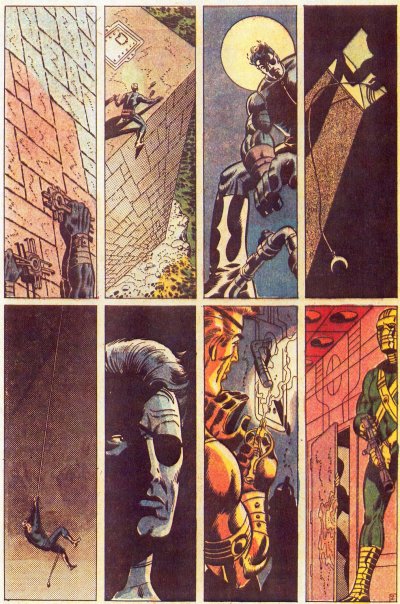


    For more on Steranko, check both Wikipedia and Tony's site for countless examples of Steranko's art.


    The uncensored illustration of Nick Fury's girlfriend Countess Valentina. Marvel Comics, in their infinite wisdom, blackened out in the published version the curvy details of La Contessa's buttocks, perhaps thinking they would be too much for the imaginations of the boy readers who had just entered their puberty...
    Wednesday, January 21, 2009

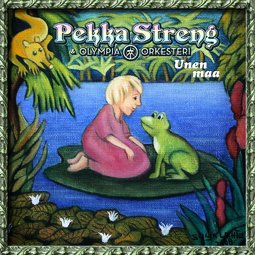
    Pekka Streng: Unen maa (CD)


    Artist: Pekka Streng & Olympia-Orkesteri
    Title: Unen maa
    Format: CD
    Publication code: 50999 694030 2 6
    ICPN number: 50999 694030 2 6
    Date: 21 January 2009
    Record label: EMI Finland

    Tracklist:

    1. Noidat ("The witches")
    2. Sinua ikävöin ("I miss you")
    3. Olen rakastunut ("I'm in love")
    4. Olet onnellinen ("You're happy")
    5. Aapeli ("Abel")
    6. Metsästäjä ("The hunter")
    7. Sammakko Sim ("Sim the frog")
    8. Topi Jäppisen koti ("The home of Topi Jäppinen")
    9. Itsemurhatalon luona ("By the suicide house")
    10. Suruperhonen ("The butterfly of sorrow")
    11. Keijut ("The elves")
    12. Sinä aamuna ("That morning")
    13. Kohtalo ("Fate")
    14. Muumipeikon tassuttelu ("The treading of Moomintroll")
    15. Luumupuupoika ("The plum tree boy")

    Pekka Streng (26 April 1948 - 11 April 1975) was a Finnish artist whose recorded music was a combination of folk and psychedelia with some jazzy flavour and occasional electronic experimentation. He died of cancer only two weeks before his 27th birthday, but his two albums, Magneettimiehen kuolema ("The Death of Magnet Man", 1970) and Kesämaa ("Summerland", 1972), have assured him a huge posthumous cult following and influential position even among those fans who hadn't been born at the time of his death. Pekka Streng's mystique is increased by the fact that he avoided publicity all his life, giving only one interview, which was published after his death in 1978.

    Many artists of the current Finnish psychedelic folk/"New Weird of Finland" scene, such as Sami Sänpäkkilä of Es and Fonal Records, have openly admitted their debt to Pekka Streng. Also Sähkö Recordings' sublabel Jazzpuu re-released in 2001 as a 12" the original and extended versions of Streng's posthumous "cult hit" 'Puutarhassa' ("In the garden"), a jazzy and bossanova-like song out of Kesämaa. (Though the biggest fan favourite by Pekka Streng still remains 'Sisältäni portin löysin', "I found a gate inside me", an esoteric-psychedelic inner journey folk excursion out of Magneettimiehen kuolema).

    In the late 1960s Pekka Streng was an active member of Ylioppilasteatteri, Helsinki's Student Theatre, appearing among all as one of the extras of Risto Jarva's science fiction film Ruusujen aika (1969). 1969 was generally a busy year for Pekka Streng: his ten-part radio play adaptation of J.M. Barrie's Peter Pan premiered for YLE in January-February, the same year his two other radio plays were aired: Papiljonttinainen ("The curler woman"), which was meant for children, and the psychedelic collage Kreivi von Krolockin hymyn variaatiot ("The variations of Count von Krolock's smile"), both based on Streng's own texts and featuring also his songs. Furthermore, 1969 saw the release of Streng's first single, 'Pieni juhlija' ("A small partygoer"; out of Tove Jansson's poem), recorded with the band called Ellipsi for Love Records, which were also to publish Pekka Streng's two legendary albums.

    The subjects of Pekka Streng's music, with its tender folk leanings, concentrate on fairy tales, Eastern mysticism and spiritualism, social criticism and so on, with a strong humanist emphasis. On his first album, Streng was backed by the musicians of the Finnish prog-rock band Tasavallan Presidentti, and the second -- more lavish in its jazzy orchestration -- had on it some of the best jazz and rock musicians in Finland.

    Unen maa ("The land of dream") consists of the demo material meant for Streng's planned third album, which never materialized during the artist's lifetime. The earliest songs originate from the late 60s, the latest apparently from 1973 and 1974. These demo recordings have been the Streng family's property since Pekka Streng's demise in 1975. It took over three decades and an enormous amount of background work and lobbying from the admirers of the late artist (such as the journalist Suonna Kononen and documentary film director Arto Halonen) until Pekka Streng's son Joonia Streng, now working as a lawyer, gave green light to the publication of the material and EMI of Finland took interest.

    Unen maa has 15 previously unreleased Pekka Streng songs; two of them in their original form, the rest as versions arranged by producer Jukka Hakoköngäs and Olympia-Orkesteri out of the original monophonic reel-to-reel demos by Pekka Streng. The demo recordings featured only Streng's vocals and guitar to which Olympia-orkesteri added other instrumentation, after environmental noise had been removed from the tapes.

    The sleeve art of Unen maa is by Sonja Lehto, Pekka Streng's sister, who also designed the covers for his Magneettimiehen kuolema and Kesämaa albums.

    Arto Halonen is working on a documentary film on Pekka Streng, due autumn 2009.

    Personnel on Unen maa:

  • Pekka Streng: vocals, guitar

  • Jukka Hakoköngäs: grand piano, "Aunt Bertha" B3, Nord Wave, Nord 2X, Prophet '08, Moog Voyager, Mopho, percussion, guitar, bass
  • Anssi Nykänen: drums, percussion
  • Jarno T. Karjalainen: bass
  • Timo Kämäräinen: guitars, vocals
  • Jukka Perko: soprano saxophone

    Unen maa info in Finnish @ EMI Finland


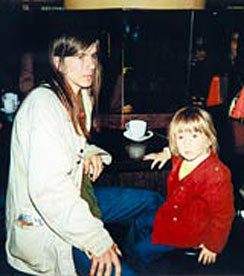
    Pekka Streng with son Joonia


  • Pekka Streng - a tribute site in Finnish

  • Pekka Streng discography @ Discogs

    Articles in Finnish:

  • Lauluja haudan takaa @ Karjalainen

    Pekka Streng audio & video links:

  • Memories of Pekka Streng: one audio clip and one video clip @ YLE Elävä Arkisto
  • Audio excerpts of Pekka Streng's radio plays @ YLE Elävä Arkisto

  • Pekka Streng search results @ YouTube

    Additional material @ pHinnWeb:

  • Psychedelic music (and garage rock) in Finland
  • The Early Years of Finnish Electronic Music & Avantgarde
  • Wednesday, January 07, 2009

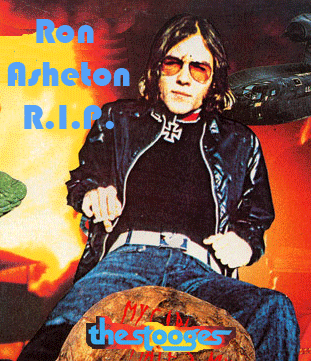
    Ron Asheton of The Stooges (1948 - 2009*)


    Ron Asheton, who played guitar for The Stooges, has died at the age of 60. The Stooges were born in the late 1960s in Ann Arbor, near Detroit, in the aftermath of psychedelia and garage rock explosion; often joining on gigs The MC5, who considered The Stooges their "little brother" band. Like Scott Asheton, his drummer brother and fellow Stooges member, Ron Asheton always remained in the shadow of Iggy Pop, the wild frontman of the band (who later became a successful solo artist, recording with such people as David Bowie), but it was Ron's spiky guitar sound which was there to influence punk rock some years after The Stooges had split.

    The 21st century Stooges reunion saw Iggy, Ron and Scott together again, though for many fans the 2007 album The Weirdness is best to be forgotten: just stick to the classics, The Stooges (1969), Funhouse (1970) and Raw Power (1973; although Ron was only "reduced" to play bass there, with James Williamson on guitar) -- there's also plenty of sessions, unreleased and bootleg material around, just see The Stooges @ Discogs. As the band themselves put it on one of their more rare songs: Jesus Loves The Stooges! R.I.P. Ron.

  • More @ MLive.Com
  • Obituary @ BBC News
  • Obituary @ CNN

    (*) Ron's body was found at his home several days after the demise, so it's not clear if his death took place before the New Year or after.


    The Stooges live in Cincinnati, 1970


    The Stooges/MC5


    The Stooges, "a hippie festival" in 1970
  • Friday, December 19, 2008

    Wigwam, Eero Koivistoinen and Seija Simola in 1969


    Wigwam feat. Seija Simola & Eero Koivistoinen: 'Birthday Day' (1969)


    Wigwam feat. Seija Simola & Eero Koivistoinen: 'A Girl I Knew' (1969)


    Seija Simola, 1969. Image © YLE.

    See the videos also here:

  • Wigwam & Seija Simola: 'A Girl I Knew'
  • Wigwam & Seija Simola: 'Birthday Day'

    Info in Finnish on Wigwam and Seija Simola:
    http://yle.fi/elavaarkisto/?s=s&g=5&ag=72&t=764&a=6483


    An archive discovery from December 1969: Wigwam and Eero Koivistoinen present with chanteuse Seija Simola two rock numbers in a psychedelic setting for a "Luola" ("Cave") section of a YLE TV show called Tunti ("Hour"). Wigwam provided in 1970 the music for a TV drama called Grottan, though they are not featured in the play itself.

    Wigwam is presented here by the original members Ronnie Österberg (drums), Mats Huldén (bass) and Vladimir "Nikke" Nikamo (guitar); with additional members Tuomo Tanska (keyboards) and Eero Koivistoinen (saxophone), the latter having been in the line-up of Blues Section with Jim Pembroke and Österberg. Pembroke and Jukka Gustavson who both joined Wigwam in 1969 are not involved. Seija Simola was heard on Koivistoinen's seminal Valtakunta album of 1968.

    The songs played by Wigwam here are originally from the repertoire of Denmark's Savage Rose; with Finnish translations provided by Juha "Watt" Vainio, though only one of the translations is heard. Other topics of this Tunti episode were the "pop report" and "today's politics" (something that would never happen in a contemporary pop music TV show). Also a Czech short film was seen. This Wigwam performance is the only known remaining videotape of the band, pre-1974. (Info provided by Jukka Lindfors/YLE Elävä Arkisto).

    More by Wigwam:


    Wigwam: 'Colossus' (1976)
  • Another Vesimiehen Aika Radio Show @ YLE Areena


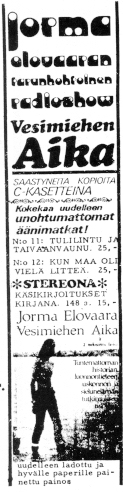
    YLE Areena offers another episode of Jorma Elovaara's legendary psychedelic counterculture radio show Vesimiehen aika ("Age of Aquarius"), available online until 21 December 2008 (it can be listened only in Finland). The sound quality is low, only 32 kbps:

    http://areena.yle.fi/toista?id=1720688

    (Thanks for the info: J.H.)

  • More Vesimiehen Aika audioclips @ YLE Elävä Arkisto
  • Monday, November 24, 2008

    The Sperm: Shh! Re-Release on De Stijl


    (A scan taken from a copy belonging or having belonged to Heikki Harma a.k.a. Hector...?)

    Artist: The Sperm
    Title: Shh!
    Format: 12" vinyl LP
    Cat.no.: IND 039 (original: ORLP 0)
    Label: De Stijl Records (original: O Records)
    Year: 1970 (original) / 2008 (re-release)

    Tracklist:

    A1. Heinäsirkat ("Locusts")
    A2. Korvapoliklinikka Hesperia ("Ear Clinic Hesperia")
    B1. Jazz, Jazz
    B2. Dodekafoninen Talvisota ("Dodecaphonic Winter War")

    De Stijl label announces a vinyl re-release of Shh!, the heavily collected 1970 album of Helsinki's controversial experimental improvisational/performance act The Sperm, originally out on the band's own O Records and featuring in its line-up such people as Pekka Airaksinen (known also for many solo albums now enjoying an international cult reputation), Jan-Olof Mallander (nowadays an art critic) and Mattijuhani Koponen (a poet/actor and the most notorious member of the band, who had a prison sentence after having a performance of a simulated sexual intercourse on a grand piano). Also guitarist Vladimir "Nikke" Nikamo, who had a brief stint in early Wigwam, participated in the compositions of this album.

    Press release notes from De Stilj:

    "soon forthcoming is a totally legit LP only reissue of this amazing Helsinki monsterpiece from 1970. Shh! is primarily a document of Pekka Airaksinen's experimental compostions, consisting of primitive samples, guitar loop feedback and musique concrete.

    Sperm also functioned as a wildly theatrical live act ala Dionysis in '69, that would arrange underground happenings, occasionally inspiring a rallied public outcry against the derisive act of public sex atop a grand piano.

    ooh la la..."

  • FinnScene - The Early Years of Finnish Electronic & Avantgarde Music @ pHinnWeb
  • Kemialliset Ystävät/Sunroof! Split 12" on Fat Cat Records (UK)


    On Fat Cat Records' acclaimed split 12" series there's a new release from Tampere's Kemialliset Ystävät with Sunroof! (a.k.a. Matthew Bower of Bradford, UK).

    Artist: Kemialliset Ystävät / Sunroof!
    Title: Split #19
    Cat.no.: 12FAT076
    Label: Fat Cat Records (UK)
    Date: 27 October 2008 (UK, Europe & rest of world) / 21 October 2008 (USA & Canada)

    Tracklist:

    A1. Kemialliset Ystävät: Taivaassa on loivemmat mäet
    A2. Kemialliset Ystävät: Hyvällisen tähdellistä
    A3. Kemialliset Ystävät: Yöllä tulen ja raapasen tulen karvoihin!
    A4. Kemialliset Ystävät: Pirtua raamatun kansissa
    A5. Kemialliset Ystävät: Tässä maassa kun näin makailen
    B1. Sunroof!: Little Ornamental Lake Of Death
    B2. Sunroof!: Spiritual Forgery
    B3. Sunroof!: Extinction Fantasy

    Press release notes from Fat Cat Records:

    Another album-length release, the nineteenth 12” in our acclaimed Split Series presents two immensely vital and influential artists whose fiercely focused and highly individual music has genuinely pushed boundaries and an aesthetics of movement / excess in two very different, yet complimentary ways, creating their own distinctive sound-worlds.

    Led by Jan Anderzén, Kemialliset Ystävät (it translates as ‘chemical friends’) are a loose collective from Tampere in southern Finland. Existing in dialogue amongst (and beyond) the hugely creative / diverse microcosm of the Finnish scene including artists like Avarus, Lau Nau, Es, Paavoharju, Islaja, Anaksimandros, and labels like Fonal, 247 Laatijaa, and Lal Lal Lal, Kemialliset Ystävät has become an influential node on the outsider noise / folk / psych underground, finding international acclaim. Whilst many Kemialliset Ystävät recordings are solo productions, Anderzén has also employed many friends within this scene as floating / occasional members through the years, and other players on these tracks include Sami Sänpäkkilä (1, 2, 3, 5), Roope Eronen (3), Niko-Matti Ahti (3, 5), Tomas Regan (3, 5), Markus Mäki (3, 5), and Elissa Määttänen (5).

    With nearly 50 releases (in all manner of formats) since its inception in 1995, Kemialliset Ystävät has remained a constantly moving enigma. Almost entirely self-taught and using a bewildering array of instruments and approaches, their sonic arsenal includes detuned guitars, bass, traditional / vernacular instrumentation (mandolins, balalaikas, etc.) hand percussion, all manner of electronic instruments, effects, toys and circuit-bent items, treated samples and vinyl manipulation. Playfully taking their own unique and unpredictable path, they have layered and fused together traditional Finnish (at times almost medieval-sounding) instrumentation and melodies with avant-garde electronics, psychedelic folk / rock, noise, electro-acoustic, and percussive tribal rhythms, creating a sense of ritualistic magic and flexible, group-mind improvisation, with the whole often subjected to brutal and precise editing.

    A dense, tangled mass of independent roots, their music is rhizomatic, richly textural and riddled with obsessive detail, bizarre juxtapositions and hypnotic structures. Patterns form and dissolve again before fully apprehended. Whilst individually marked, the five tracks they’ve contributed to this 12” flow together as sections of one whole to form a fluid, simmering and restless journey through woozy loops, blurred harmonies and vocal contortions. With occasional jump-cuts, and all manner of spluttering, splattering electronics, its shimmering sense of tension eventually resolves as forms emerge – sometimes fleetingly, sometimes with a longer, more coherent rhythmic / melodic pull.

    Brilliantly twisted and prolific, Anderzén’s home-baked output extends beyond his music to a vast flood of drawings, paintings and collaged artwork. Fans for a long while, FatCat’s initial hookup with Kemialliset Ystävät occurred in February 2006, when the band were invited to play at FatCat’s ‘Open Circuit’ Festival in belgium, at which they also played a live improvised collaboration with Múm. A fantastic live unit, they will be touring the UK / Europe this Autumn.

  • Full press release notes, sound samples and related links @ Fat Cat
  • Kemialliset Ystävät @ Fat Cat
  • Monday, November 17, 2008

    'Carnival of Light' by The Beatles Finally To Be Released?


    The Beatles: 'Revolution 9' (1968)

    Paul McCartney on 'Carnival of Light' @ CNN (16 November 2008)

    By its written description sounding perhaps like something in the style of infamous 'Revolution No. 9' off White Album (and the sound experiments John Lennon made with Yoko Ono), the unreleased 14-minute track 'Carnival of Light' by The Beatles, recorded in their psychedelic period of 1967, has become something of a myth among the fans and collectors. The track's release was planned for The Beatles Anthology 2 of 1996, but George Harrison (who died in 2001) vetoed it (some sources say the producer George Martin was not so hot of the idea, either).

    Thursday, November 13, 2008

    Mitch Mitchell, the drummer for The Jimi Hendrix Experience (1947 - 2008)


    Mitch Mitchell: drum solo at a Jimi Hendrix gig in Sweden, January 9, 1969

    Mitch Mitchell, who played drums with The Jimi Hendrix Experience, has died at the age of 61. Mitchell was the last surviving member of The Experience, Hendrix having passed away in 1970 and the bassist Noel Redding in 2003.

  • Obituary @ KGW News
  • Thursday, August 14, 2008

    Blues Section: 'Semi-Circle Solitude' (1968)


    Blues Section: 'Semi-Circle Solitude' (1968)


    Blues Section: 'Cherry Cup-Cake Twist' (1968)


    Blues Section: 'Hey Hey Hey' (1967)


    Blues Section: 'Call Me On Your Telephone' (1967)

    'Semi-Circle Solitude' is probably my all-time favourite track from Blues Section, a late-60s Finnish rhythm & blues/psychedelic band fronted by a great British ex-pat singer-songwriter, Jim Pembroke (later of Wigwam, another band worth checking out and don't let the "progessive rock" tag put you off, because there's some memorable songwriting here, too). The film excerpts for 'Semi-Circle Solitude' and 'Cherry Cup-Cake Twist' are from Jaakko Pakkasvirta's documentary film Eläköön nuoruus ("Viva Youth", 1968). 'Hey Hey Hey' was used in Mikko Niskanen's 1967 film Lapualaismorsian, in a sequence depicting how students in Helsinki celebrate Mayday.

    YouTube also has Blues Section's 'Kuka kertoisi minulle?' ("Who would tell me?"; as vocalist Pepe Willberg, formerly of The Jormas), from Timo Bergholm's drama film Punahilkka ("Little Red Riding Hood"), another movie from 1968. Furthermore, there's a clip of 'End of a Poem', from their 1996 comeback gig.

  • Lyrics @ Mikko Meriläinen's excellent Blues Section/Wigwam site

  • 60s Garage Rock & Psychedelia in Finland @ pHinnWeb

    And as bonus, more Jim Pembroke songwriting, 'Simple Human Kindness' from Wigwam's "deep pop" album Nuclear Nightclub (1975); this studio live is from 1976:


    Wigwam: 'Simple Human Kindness' (1976, off Pop-Liisa TV show)
  • Friday, August 08, 2008

    Paul Cannell (1963 - 2005) and Primal Scream's Screamadelica


    Screamadelica

    Don't Fight It, Feel It

    Higher Than The Sun

    Paul Cannell (16 March 1963 - 5 July 2005) was responsible for the artwork of Screamadelica-era Primal Scream. Most famous of these was the "psychedelic fried eggs" illustration for that 1991 album, which the band adopted as their logo, too; also for Primal Scream's singles from the album, such as Higher Than The Sun and Don't Fight It, Feel It. Cannell created here a sort of fascinating and mind-bending combination of bright day-glo pop art colours and symbols, primitive art, expressionism and psychedelia; essentially creating a visual equivalent for Screamadelica's po-mo mixture of 60s retro psych-pop and electronic/dub sounds, Primal Scream's finest moment so far, which briefly epitomised the early-90s British "indie meets rave" scene.

    As to the music itself, infamously, a lot of the output for the album was not actually created by the band themselves (who were earlier known as The Rolling Stones/MC5 copycats; the henchman Bobby Gillespie having also previously played drums for Jesus and The Mary Chain) but by the producers and remixers such as Andy Weatherall and The Orb's Alex Paterson, while the band was concentrating on just, erm, getting higher than the sun.

    One of the band's contemporaries and rivals in the early-90s neo-psychedelic dance music scene, Colin Angus of The Shamen bitterly compared in an i-D magazine interview Primal Scream with The Chocolate Watch Band, a US West Coast band of the late-60s, who similarly were rather spending their time enjoying psychedelic substances in the studio backroom while their producer Ed Cobb (the man also behind The Standells and responsible for writing Gloria Jones's 'Tainted Love', later immortalised by Soft Cell) worked out with studio musicians some dazzling baroque psych soundscapes ending up on the band's album.

    Anyway, despite (or maybe because of it) this lack of "authenticity" (yawn), I'm a fan both of Screamadelica and The Chocolate Watch Band. The Shamen quickly disappeared up their own Terence McKenna-inspired cyberdelic wormhole with such god-awful singles as 'Destination Eschaton' but the Primals are still around, even though their erratic output (subsequent albums featuring in turns techno sounds and "back to the roots" pastiche country rock) has for me never again reached similar solar heights.

    Back to Paul Cannell, he also created artwork for such bands as Manic Street Preachers, Shonen Knife, Flowered Up and The Telescopes. Sadly, Paul Cannell ended up taking his own life in 2005, but his vision lives on.

  • Paul Cannell interview @ Diskant
  • Paul Cannell @ The Wolf Hounds
  • Paul Cannell @ Primal Scream Webadelica

    Primal Scream's Screamadelica-era songs at YouTube:

  • 'Come Together'
  • 'Come Together' - long version (audio only)
  • 'Don't Fight It, Feel It'
  • 'Higher Than The Sun'
  • 'Higher Than The Sun' - 12" version (audio only)
  • 'Loaded'
  • 'Movin' On Up'
  • 'Slip Inside This House'
  • Friday, July 25, 2008

    "I Want To Take You Higher..."


    Sly & the Family Stone: 'I Want To Take You Higher' (live at Woodstock, 1969)

    Just watched again the concert film Woodstock, on the biggest counter-cultural event of 1960s. The worst excesses of drug-driven lifestyle and rampant commercialism ever more affecting the "underground" had clearly taken their toll by this time and some performances appear no more than self-indulgent hippie dross now; the film's sole highlight for me being Sly & the Family Stone's energetic live take of their 'I Want To Take You Higher', showing the band still at the height of their powers, unlike e.g. Jimi Hendrix who was already at decline during the time of the festival, despite his controversial, electrifying and Zeitgeist-defining guitar improvisation of 'Star-Spangled Banner' being there. Too bad Sly would also lose it on drugs before too long.

    (As a technical side-note, it's interesting to notice Sly uses here a "rhythm box" in the song, being probably one of the earliest examples of "machine-driven" funk; Dick Hyman's 1969 Moog version of James Brown's 'Give It Up Or Turn It Loose' being another one.)

    ---

    Unrelated: Musex (Music Export Finland) also has a blog now -- http://musex.blogspot.com/" -- but I seem to be unable to update it to the blogroll for the time being. Blaah, can't think clearly, it's too damn hot...

    Sunday, July 20, 2008

    Electronic Dance Music: Where Next?


    Trips Festival, San Francisco, 1966 - an early "rave" with Donald Buchla sounds

    Some food for thought by Philip Sherburne for electronic dance music artists, DJs, clubbers and fans:

    http://www.pitchforkmedia.com/article/feature/142152-the-month-in-techno

    Well, I have no answers or solutions. Personally, at the moment the past and origins seem to be more inspiring than the current state of club culture, as just finishing Analog Days (2002) on the early days of analogue synths (Moog, Buchla, ARP, EMS) proved.

    Tuesday, July 01, 2008

    Jorma Elovaara 1970 Radio Show For A Limited Time


    Jorma Elovaara in 1968

    An April 1970 episode of Jorma Elovaara's legendary psychedelic/counter-culture radio show Vesimiehen Aika ("The Age of Aquarius") can be heard for a limited time of one week (sorry, Finland only, it seems) at:

    http://lotta.yle.fi/ijulkaisu.nsf/sivut/olipakerranradio?opendocument&pageid=Content134902B463C

    (Thanks for the tip: J.H.)

    Monday, June 09, 2008

    Prince 50 Years


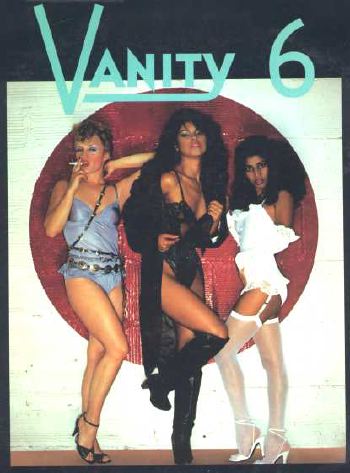
    Prince obviously doesn't like Websites featuring his images, videos, lyrics or music, so here instead some pics of his early-80s protégés, a girl group Vanity 6, which later became Apollonia 6.

    Prince just got 50 -- pHinnWeb congratulates. I am a huge fan of his 80s output, Prince's "Golden Age" with the winning series of albums like Dirty Mind (1980), Controversy (1981), 1999 (1982), Purple Rain (1984), Around the World in a Day (1985), Parade (1986) and Sign 'O' The Times (1987). Perhaps I'll give a closer dissemination of these one day. Anywhere, it was Lovesexy (1988) which started 2 leave me cold and after which I didn't have 2 collect from him just everything I could get into my hands. Anyway, thank U 4 the memories, influence and inspiration -- may U still live 2 see The Dawn (and hopefully a return 2 the form one day).

    Friday, June 06, 2008

    Maanalaista menoa - Finnish Underground 1967 - 1971


    The notorious Mattijuhani Koponen performing with The Sperm, 1968

    I missed the documentary series Maanalaista menoa (might translate as something like "Underground Happenings") on Finnish underground culture approximately during the years 1967-1971 (and beyond) when the digital channel YLE Teema showed it for the first time around last year, but gladly they now re-run it. You can also find the holy video and audio scrolls relating to the subject at YLE Elävä Arkisto archive:

    http://www.yle.fi/elavaarkisto/?s=h&n=maanalaista+menoa&k=&m=

    More:

  • FinnScene - The Early Years @ pHinnWeb
  •