Showing posts with label literature. Show all posts

Monday, April 20, 2009

J.G. Ballard (1930 - 2009)


British writer J.G. Ballard died on Sunday 19 April 2009. Ballard, who had been diagnosed with prostrate cancer in June 2006, was 78 years old. Among his best-known novels are such as Crash, High-Rise, Empire of the Sun, and Super-Cannes.

Though usually cited as a science fiction writer (he was one of the vanguards of the "New Wave" of sci-fi coming into prominence in the 1960s with such celebrated magazines as New Worlds, which he also contributed), Ballard's main theme was the psychopathology of contemporary society. The writer inspired by French Surrealists of the early 20th century, Ballard's works usually were about the civilisation crumbling but also mutating into something else, creating its own beauty and serenity. His psycho-geographical landscapes were inhabitated by alienated but inquisitive characters obsessed by a combination of technology, celebrity cult, sex and violence; all of which they worshipped with a religious fervour and even some sort of strange dignity.

Crash (1973) is about a small cult of people sexually obsessed with becoming injured or even dying in car accidents, preferably featuring some celebrity figures such as Elizabeth Taylor. Concrete Island (1974) describes a modern-day Robinson Crusoe, who finds himself helplessly stranded on a traffic island in the abyss of a spaghetti junction, his pleas for help ignored by passing cars. As with film director Luis Buñuel, Ballard's works could often be seen as surreal satires of the "discreet charm of bourgeoisie", and High-Rise (1975) shows a group of people consisting of highly-paid professionals and inhabiting an ultra-modern tower block degenerate into a constant life of violent orgy. In The Unlimited Dream Company (1979) an aviator crashes his plane in a suburb town of the Thames Valley, becoming a sort of Messiah with supernatural powers in a tale which might be or not only a final fantasy of a dying man. Ballard's late quadrology Cocaine Nights (1996), Super-Cannes (2000) (these two being actually companion pieces, so similar they are in their themes), Millennium People (2003) and Kingdom Come (2006) also show these same upper-middle class people instigating absurd violence to alleviate the boredom and social friction in their tightly guarded resort communities, business parks and shopping malls.

In a perfect world, the Nobel Award for Literature would have been Ballard's, but science/speculative fiction has never really fitted the appetites of that venerable election committee, not to speak about the controversial nature of his works. It would perhaps be preposterous to call Ballard's works prophetical, but I'm quite sure in the years to come more and more resonance will be found with his works and how the world around us turns out to be. No, as it already is: Ballard's dystopias took place not in some far future or a faraway country, but here and now.

In popular culture, J.G. Ballard has been for years a hip name to throw around and his works have inspired countless other writers, film-makers, artists and musicians. Empire of The Sun, an autobiographical book on Ballard's childhood years in the Japanese-occupied Shanghai, was filmed by Steven Spielberg in 1987. The Crash film version by David Cronenberg (whose earlier works such as Videodrome had a definite Ballardian tone) stirred some controversy in 1996.

Daniel Miller, the founder of Mute Records, recorded in 1978 under the alias of The Normal 'Warm Leatherette', a song based on Ballard's Crash. The Normal's electronic contemporaries such as Gary Numan ('Down In The Park') and John Foxx (Metamatic) have read their Ballard, too. Joy Division's late frontman Ian Curtis took the name for one of their songs, 'The Atrocity Exhibition', from a short story collection of Ballard.


The Normal: 'Warm Leatherette' with film clips from Crash adaptation by David Cronenberg

  • Ballardian.com - a Website dedicated to all things J.G. Ballard

    Obituaries & tributes:

  • BBC News
  • Feuilleton
  • Helsingin Sanomat (in Finnish)
  • Michael Moorcock @ Ballardian
  • Salon (by Simon Reynolds)
  • Friday, January 09, 2009

    Jante'd - More on Jante Law


    Amadeus trailer (1984)

    (Jante Law, Part 1)

    Artists (painters, writers, film-makers, musicians, ahem, DJs...), the narcissistic and self-centred creatures they are, live in constant fear. That fear is of competition, that a new hero/heroine will come up; being more talented, more creative, more innovative, more outspoken; outsmarting and making obsolete our poor narcissist, who will find out s/he is only a derivative hack feeding off other people's ideas and creating nothing essentially new in the process. Therefore, it will become necessary to eliminate the new contenders, whatever it takes, put them to their real place in the pecking order.

    One of the most well-known case histories of this process of the artistic rival's elimination is featured in Milos Forman's 1984 biopic Amadeus, which depicts the intrigues and plots of composer Antonio Salieri to get rid of Wolfgang Amadeus Mozart, whose talent Salieri is fiercely envious and afraid of. (It's better not to get into any possible historical inaccuracies here, such as Tom Hulce's take of Mozart as a giggling punk rocker of his time -- the fabulist film-makers just want to tell as juicy story as possible to delight the viewers, not historians.)

    Salieri's behaviour here is basically Jante Law in action, though usually its mechanisms are of more devious and invisible nature, much harder to detect. That is because there might not be found only one jealous Salieri to put spokes in the wheels but apparently a whole establishment (of rivalling artists and other cultural gatekeepers of the art world), as if designed to make our poor talent's life hard -- and this is also where conspiracy theories begin.

    Is our artist only a paranoid imagining things, or is someone actually plotting to block his/her way, speaking bad things of him/her behind his/her back and generally making things difficult for him/her? Even worse than actual attacks on the artist's work and person or negative criticism might be the "conspiracy of silence", as if s/he was silenced to death by the lack of any feedback whatsoever.

    Thus is born another martyr, another artist misunderstood by his/her peers, another victim of persecution syndrome. (Not to speak about other possible discriminating factors, depending on our artist's gender, nationality, race, sexual orientation, political views and so on: just open any art mag or culture pages of your morning paper for any desperate outcries and extra evidence.) Our artist was "Jante'd". Of course, there is no real way to know, but "being paranoid doesn't mean they aren't out to get you". (Though personally, more than conspiracy theories, I always put more weight to just incompetence, people's laziness, prejudices and comfort-seeking nature that prevents them looking for any new viewpoints outside their small circles of acquaintances or "good old boys", comfort zones, current trends or "the tried and true".)

    Naturally, it's possible our artist, that poor and sensitive spring daisy, may have only him/herself to blame, having just rubbed too many people the wrong way. Being a creative one doesn't always fit together with having a wholesome personality, being a nice, jovial bloke or lass, and many of them/us are -- let's face it -- just irritating twats with overblown egos.

    We don't like obnoxious or boastful personalities, because it is as if they pose a threat to our own existence. Any self-hype makes us wary. We don't like forked tongues, slimy showbiz types, obvious fly-by-nights but most of all, we don't like people who blow their own horn too avidly: especially if they are potential rivals.

    Or then, maybe our artist actually is talentless, despite his/her delusions to the contrary, so the Jante process of elimination only does a great service to the rest of the world.

    Sunday, January 04, 2009

    The Jante Law


    Aksel Sandemose, the inventor of Jante Law

    Jante Law was developed by Danish-Norwegian writer Aksel Sandemose (1899 - 1965) in his novel En flyktning krysser sitt spor ("A fugitive crosses his tracks", 1933). There Sandemose describes life in an imaginary village called Jante, which is loosely based on his own home village.

    Jante Law is basically an unwritten and strict code of conduct regulating all fields of life and guaranteeing not one individual will rise above the rest, under the threat of all sorts of social sanctions, common disapproval and so on. These hierarchies and "pecking orders" will take care that only those members who will agree to play along the rules will subsist, and those diverting from the path will be cast aside. Jante Law is considered especially a Scandinavian phenomenon, distinctive of relatively tiny, close-knit societies of "small village mentality", but also Australia, New Zealand and Canada are said to have something similar, called "Tall Poppy Syndrome".

    Lately Jante Law came up in Finnish domestic discussion when it was claimed Panu Rajala, the author of Unio Mystica, a biography of the legendary Finnish writer Mika Waltari, lost the acclaimed Finlandia Prize only because the Prize Board members thought Mr. Rajala's "celebrity status" -- the author often featured on the pages of ladies' magazines and so on -- prevented the book in question having any real "literary merit" in the eyes of the Board and thus from receiving the Prize many thought Rajala's book deserved.

    Other examples in Finnish cultural life are countless; just every time when it's a question of the artists' job opportunities, grants and common recognition, being the source of endless bitterness for those hapless individuals who consider themselves being discriminated by "the System" or even by "the Mafia" (i.e. the cultural gatekeepers such as critics, curators, publishers and so on).

    The late Finnish artist Kalervo Palsa, known for his morbid and grotesque paintings and comics depicting sex and death, kept Jante Law as his motto sign on the wall.

    Jante Law:

    1. Don't think you are anything.
    2. Don't think you are as good as us.
    3. Don't think you are smarter than us.
    4. Don't fancy yourself better than us.
    5. Don't think you know more than us.
    6. Don't think you are greater than us.
    7. Don't think you are good for anything.
    8. Don't laugh at us.
    9. Don't think that anyone cares about you.
    10. Don't think you can teach us anything.

    Jante'd - More on Jante Law

    Thursday, December 25, 2008

    Harold Pinter (1930 - 2008)


    Harold Pinter's The Caretaker - "The Job Offer" (1963, directed by Clive Donner)

  • More Harold Pinter search results @ YouTube

    Harold Pinter, British playwright of the Modernist generation of "Angry Young Men", has died at the age of 78. He received the Literature Nobel Prize in 2005.
  • "Christmas? Bah, Humbug!"


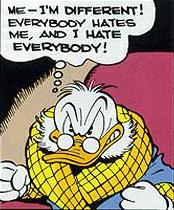
    Scrooge McDuck is a Disney character created by American comic book artist Carl Barks (1901 - 2000) for the Donald Duck story Christmas on Bear Mountain in 1947. The wealthy, nasty and misanthropic old duck, scary to the point of being Gothic, was modelled after Ebeneezer Scrooge, the Christmas-hating rich curmudgeon in A Christmas Carol (1843) by Charles Dickens. Mr. Scrooge's disapproving catchprase "Bah, humbug!" was something he used to describe the Yuletide in general.

    Thus "Scrooge" has also became a common nickname for the people disliking Christmas for various reasons of their own.

    Later on, for his Donald Duck comics Carl Barks softened the character of "Uncle Scrooge", who became a caricature (though one not portrayed with a too critical eye) of an extremely wealthy but overtly stingy venture capitalist, keen to literally take swims in the sea of coins he keeps in his Money Bin building. For those to whom Walt Disney's empire means American cultural imperialism at its worst, the association became all too poignant (for further studies, check out How To Read Donald Duck by Ariel Dorfman and Armand Mattelart, 1971).

    Politics aside, the late 1940s is my favourite Barks era when his visual style was at its sharpest; often capturing some hues of the noir-ish post-war angst even with occasional Gothic overtones, to his otherwise comical stories meant for children. This was especially obvious with his long storylines, usually displaying a more epic scale in exotic locations around the world, in comparison to his "shorties" that were based on different "screwball"-style gags around everyday hometown situations, and other classics such as The Ghost of the Grotto and The Old Castle's Secret were born.

  • Christmas on Bear Mountain synopsis and links @ Wikipedia
  • Thursday, November 06, 2008

    Michael Crichton (1942 - 2008)


    The Andromeda Strain opening credits (1971)

    Michael Crichton, a prolific American bestseller novelist, film director and TV producer has died. The Andromeda Strain and Jurassic Park were among his best-known books, the cult sci-fi movie Westworld [trailer] (1973) one of the films he directed.

    Tuesday, October 07, 2008

    Paavo Haavikko (1931 - 2008)


    Rauta-aika (1982)

    ("The Iron Age", an expensive TV production based on Finnish national epic Kalevala and written by Haavikko.)

    Paavo Haavikko, a Finnish Academy member and one of the most prominent Modernist poets and writers in Finland has passed away. Haavikko was also a playwright, essayist, book publisher and an avid social commentator.

  • Paavo Haavikko biography @ Kirjasto.sci.fi
  • Friday, September 19, 2008

    Mika Waltari 100 Years


    "So it has been and so it always will be."
    - The motto from The Egyptian.

    Today is the 100th anniversarsy of the birth of Mika Waltari (19 September 1908 - 26 August 1979), a Finnish writer (and national institution) best known for his extensive historical novels that are widely translated into many languages; the biggest favourite among readers continuously being Sinuhe Egyptiläinen ("The Egyptian", 1945), which is also known as less-than-successful Hollywood film version of 1954. Sinuhe was voted in April 2008 as the most loved Finnish book of all time.


    Sinuhe Egyptiläinen/The Egyptian with the famous cover illustration by Björn Landström.


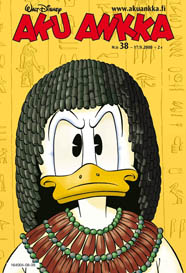
    Telling something about the canonized position of Mika Waltari in Finland, even the domestic edition of Donald Duck dedicated its latest issue to the author's 100th anniversary.


    The extremely prolific Mika Waltari was also a detective novelist, his Inspector Palmu books becoming a series of four films in the 1960s, directed by Matti Kassila and starring Joel Rinne as Palmu.


    Komisario Palmu


    Leo Jokela: 'Silmät tummat kuin yö', off Komisario Palmun erehdys (1960)


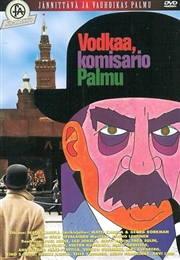
    The first three films remain classics of Finnish cinema; less successful, though, was the last installment of the movie series, Vodkaa, Komisario Palmu (1969), the first to be filmed in colour and not based on any of Waltari's original books but only retaining their central characters; having as its tone campy agent comedy making fun of Finnish-Soviet relations and other phenomena of the day. An interesting curiosity, though:


    Viktor Klimenko & Inga Sulin, off Vodkaa, Komisario Palmu (1969)


    Potent Flash "commercial" from Vodkaa, Komisario Palmu (1969)

  • MikaWaltari100.net
  • Mika Waltari @ Kirjasto.sci.fi
  • Monday, August 18, 2008

    Kapteeni Shiva Osa 2


    Kapteeni Shiva Osa 2, the second book to Captain Shiva's adventures by Megatron Braineater is out on Helsinki's Flamongo label, featuring a CD. The first book was published last year on Flamongo. Megatron Braineater (real name: Maria Candia) is a Helsinki sci-fi writer, literature student, translator and a member of the band Maria and the Robots. Available for example from Zum Teufel. (Oh, the book is in Finnish, so sorry for those of you who don't speak our Fenno-Ugric language.)

    Megatron Braineater: Kapteeni Shiva Osa 2
    352 pp., b & w
    Flamongo Kustannus 2008
    ISBN 978-952-5775-00-6

    Related links:

  • Megatron
  • Megatronin Audio Asiat
  • SF Discovery

  • Markku Soikkeli's review of Kapteeni Shiva osa 1, 2007 (in Finnish)
  • Wednesday, March 19, 2008

    Sir Arthur C. Clarke (1917 - 2008)


    Sir Arthur C. Clarke: 90th birthday reflections (December 2007)

    "Any sufficiently advanced technology is indistinguishable from magic."
    - Sir Arthur C. Clarke

    British science fiction writer Sir Arthur C. Clarke has passed away. Clarke (16 December 1917 - 19 March 2008) was best known for 2001: A Space Odyssey (1968), the basis of which was in his 1948 short story 'The Sentinel', speculating on an alien intelligence being involved in early human evolution. Clarke also worked in close collaboration with Stanley Kubrick on the novel's film version of the same year: the book and the film created, in fact, in tandem. Other well-known novels by Clarke were among all Childhood's End (1953) and Rendezvous with Rama (1972). Clarke liked to quote the first Indian Prime Minister, Pandit Nehru: "Politics and religion are obsolete; the time has come for science and spirituality. I regard that as my guiding light," he said.

    Tuesday, January 15, 2008

    Energy Flash by Simon Reynolds: Extended Mix 2008


    Joey Beltram: 'Energy Flash' (1990)

    We interrupt our regularly scheduled programming to give you this commercial announcement...

    Energy Flash: A Journey Through Rave Music and Dance Culture by Simon Reynolds is rereleased next month in expanded and updated form.

    With six extra chapters and 40 thousand new words, the remixed Energy Flash--a.k.a. Generation Ecstasy--takes in developments in dance music in the decade since its original 1998 publication: the trance resurgence, 2step garage, the nu-Eighties electro sound, microhouse, grime, breakcore, dubstep...

    Further information: http://energyflashinfohype.blogspot.com/

    UK press enquiries and review copies: Dusty Miller, Picador/Macmillan
    d.miller@macmillan.co.uk

    Thursday, November 15, 2007

    Ira Levin R.I.P.


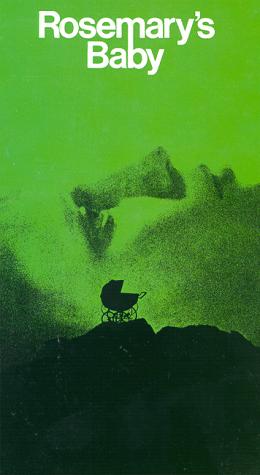
    The American suspense novelist Ira Levin (1929-2007) has passed away. Levin was best known for such works as Rosemary's Baby (1967), The Stepford Wives (1972) and The Boys From Brazil (1976), all of them also turned into film adaptations: the most successful of them Roman Polanski's Rosemary's Baby (1968), which is very faithful to the original book.

    One of Levin's strengths was to take what were some current trends in society and turn them into masterful works of suspense and paranoia that did not took place in any traditional Gothic settings such as haunted castles with their mad scientists and horror film monsters, but in (superficially) familiar and mundane everyday settings of urban/suburban life, where the uneasiness of main characters gradually grows as the events unfold.

    Such mentioned trends of the time were in Rosemary's Baby the interest in occultism and re-assessing of the religious issues in the 60s (arguably, there might not have been such "Satanic" book and film hits of the 70s as The Exorcist or The Omen had Levin not paved the way with his work); or the same era's rise of female emancipation, as reflected in The Stepford Wives, a horror/sci-fi/satire on some robot-like and very un-emancipated suburban housewives.

    ["Stepford wife" has now even become a catchprase in everyday usage -- according to Wikipedia it is: "usually applied to a woman who seems to conform blindly to an old-fashioned subservient role in relationship to her husband, compared to other, presumably more independent and vivacious women. It can also be used to criticise any person, male or female, who submits meekly to authority and/or abuse; or even to describe someone who lives in a robotic, conformist manner without giving offense to anyone. The word 'Stepford' can also be used as an adjective denoting servility or blind conformity (e.g. 'He's a real Stepford employee') or a noun ('My home town is so Stepford')."]

    Rosemary's Baby and The Stepford's Wives also make use of a very similar premise in both of them: an ordinary housewife finding herself in a new life situation -- young Rosemary Woodhouse getting pregnant with her first child and all subsequent hopes and fears arising there; a modern and feminism-orientated Joanna Eberhart with her husband and children moving from city to a suburban small town with some very conservative and old-fashioned values as to the place of woman in family and society -- and her slowly growing suspicious, even paranoid, towards the people in her nearest environment, where everything is obviously not as it seems.

  • Ira Levin @ Intercourse With The Dead


    Trailer for Rosemary's Baby (1968)


    Trailer for The Stepford Wives (1975) -- Levin himself was not particularly excited with this adaptation, though it has now become a cult film (which was also remade in 2004).


    Time magazine published in April 1966 its famous "Is God Dead?" issue, which Levin also featured in Rosemary's Baby.
  • Thursday, September 27, 2007

    Veikko Ennala


    Miltei kohdusta hautaan minua seurasivat kalvava alemmuuden ja kyvyttömyyden tunne, kaiken ja kaikkien epäily, raskasmielisyys, tuska- ja paniikkitilat ilman silmin näkyvää syytä ja epätoivoinen kurottelu rehellisyyteen. Kirjoitin ymmärtääkseni miten asiat olivat enkä miten niiden olisi pitänyt olla. Tämän takia minulla ei juuri ollut ystäviä.

    ("Almost from womb to tomb I was followed by the nagging feelings of inferiority and impotence, doubts of everything and everyone, heavy melancholy, states of pain and panic without any visible reason and the desperate reaching out for honesty. I wrote to understand how things were and not how they should have been. Because of this I had few friends.")

    - Veikko Ennala in his self-penned obituary, 1991

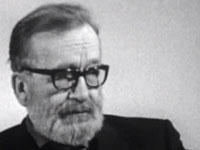
    Veikko Ennala (1922-1991) was the enfant terrible of Finnish journalism, whose specialty was stirring controversy with magazine articles and columns penned by him, often of autobiographical content; breaking all possible taboos concerning sex, death, suicide, religion, alcoholism and substance abuse, crime and the general social conditions of those living on the wrong side of the tracks. Now a long-time Ennala aficionado Tommi Liimatta (of the band Absoluuttinen Nollapiste fame and a writer in his own right) has collected from the late journalist's writings this anthology, spanning nearly half a century, called Lasteni isä on veljeni ja muita lehtikirjoituksia ("The father of my children is my brother and other magazine writings").

    The 1960s was a remarkable turning point when over 300.000 Finns emigrated to Sweden after a better living, and even inside Finland population moved from countryside to its large towns as the country which had been up until now predominantly agrarian rapidly turned towards industrialisation. This served to emphasize all sorts of social frictions which became all the more visible now when the newly settled dwellers of towns often faced -- instead of the economical Eldorado with better living standards that they had been expecting -- urban alienation which replaced the cosy rural way of life they had been earlier on accustomed to: where the bonds between families, relatives and neighbours had been tight, and life went on relatively unchanged from one generation to another. In fact, the whole Finland had been up to the 60s one large village with strict and homogenous ways of thinking; the combination of Evangelical Lutheran religion and Fennomanic patriotism providing the tight moral framework for all citizens, from which any diversion was heavily frowned upon.

    So, all this suddenly changed in the 60s; not to talk about the onslaught brought on by TV, media and all kinds of new cultural and social values. In the 1966 Parliamentary Election, the Left (Social Democrats and Communists) received a landslide victory and the Conservatives found themselves in the opposition (which lasted all the way to 1987). The young intelligentsia found themselves radicalised, which was reflected in all domestic cultural life. The overall global tumult of the decade has been well documented elsewhere, so suffice it to say that Finland wasn't left unaffected, though the era's socio-sexual-cultural revolution came to this country at least slightly delayed, filtered and customised to the local mentalities. However, this all was reflected by Finland's most sensationalist magazine, called Hymy ("Smile"), which was established already in 1959 by a budding publisher mogul and Hemingway-wannabe Urpo Lahtinen (1931-1994) and named after his then-wife, Hymy Lahtinen. It took over half a decade for Hymy magazine to gain momentum and reach its full throttle, but when Veikko Ennala -- who had already gained some journalistic notoriety -- joined its ranks in 1965, the time was ripe to shake things up in tepid Finnish culture.
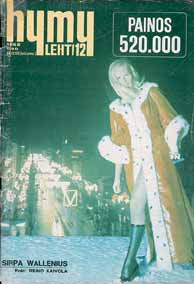


    By no means was Ennala alone responsible for Hymy's subsequent rapid ascent -- which reached its apex with the December 1968 issue, the total edition of 520.000 which was sold out, becoming the best-selling Finnish magazine of all time -- but he became to personify the magazine's journalistic agenda, which consisted of a combination of "human interest stories", accounts of all kinds of social and political injustices, celebrity interviews and naturally gossips, sensations and scandals. All sorts of illicit sex or unusual sexual behaviour, homosexuality (which those days was still a criminal offence) and perversions were in the special spotlight, often analysed in a pseudo-scientific way, and all articles naturally accompanied by revealing photographs, so that by the 70s Hymy could well be called a soft porn magazine, though one browsed through by all family, either in public or more or less in shameful secrecy.

    Accounts of both physical and mental illnesses and their countless appearances filled the pages of Hymy. Crime and the asocial lives of alcoholics, drug users and addicts were covered; also the primitive and severe conditions under which inmates had to live in correctional institutes and the poor people in countryside. The abuses of religious revivalist movements were exposed, even though also paranormal phenomena and ghost stories had their place on the pages, when all things mystical enjoyed some new-found interest in the Aquarian climate of the 60s. In other words, nothing human (or inhuman) was alien to Hymy magazine; everything that whetted the imaginations of star-struck sensation seekers and potential Peeping Tom types was covered.

    Though America had "Gonzo" writers like Hunter S. Thompson and "New Journalism" represented by Tom Wolfe (in the style of his Stateside "counterpart", Ennala also liked to dress dandy-like; like Wolfe, favouring posh white suits), perhaps somehow distantly related to Ennala's style, it's hard to imagine that a character like Veikko Ennala would have been produced by any other culture, with that specific Finnish combination of Arctic hysteria, melancholia, mania and depression finding all their expressions in his work full of angst and lust. The workaholic Ennala estimated that as a writer he had produced approximately 30.000 - 50.000 sheets of A4 size during his life. Despite that, he was also a stylistic perfectionist, who advised that every text has to be written over at least for six times. His style is peppered all over with literary and poetry quotes; apparently the cultured Ennala was not exactly one of your typical gutter press hacks, and might as well have taken a successful career in "fine literature" (he actually also published some novels and short stories), but why he chose scandal press instead, must have been a question of some very complicated circumstances and perhaps just a personal tendency as a social misfit to go against the grain.

    Admittedly, Ennala's style can be at times corny and downright soppy when he attempts with poetic turns of phrase to paint a picture of the hard fates of his long-suffering subjects but only ends up with voyeuristic saccharine melodrama, which makes him look look a pretentious hypocrite, albeit one who knows his world literature; just like "Olli Meri", a caricature of Ennala the late film director Risto Jarva depicted in his 1972 Kun taivas putoaa ("When the Heavens Fall..."), a tragicomical satire of yellow press, especially based on Hymy magazine.

    The Ennala articles in this book are collected not only from the pages Hymy but also men's magazines published under the umbrella of Lehtimiehet, Urpo Lahtinen's company, such as Nyrkkiposti, VIP, Ratto, Jallu and Kalle. From the 1950s are Ennala's articles for Apu magazine where he worked with another legend of Finnish journalism, Matti Jämsä (1929-1988), known for his daring death-defying escapades which he reported for the magazine. (Ennala got kicked out of Apu after a scandal of getting sexually involved with a 15-year old girl.) The earliest Ennala stories are from the 1940s when he worked during the Continuation War as an official war correspondent for the Information Department of the Headquarters. However, Ennala's ambitions to become the next great war writer à la Erich Maria Remarque were hindered by the censorship of high brass, who were annoyed by the realism of Ennala's combat report, unworthy as any spirit-raising propaganda, for the esteemed Suomen Kuvalehti magazine. Famous writer Olavi Paavolainen, Ennala's superior officer at the Information Dept., called young Ennala his "literarily gifted problem child". After the war Ennala also had his own column at the local newspaper of Valkeakoski, writing as "Veli-Pekka". His last articles Ennala wrote in the 80s and just before his death in 1991 for the crime magazine Alibi.

    The texts here are not in chronological order but the editor Liimatta has arranged them into such thematic categories as Ennala's life, reportages, religion and church, sexuality, little man and society, alcohol and drugs, prisons and mental health, paranormal and mysticism, celebrities, columns by Veli-Pekka for Valkeakosken Sanomat, and more Ennala's life.
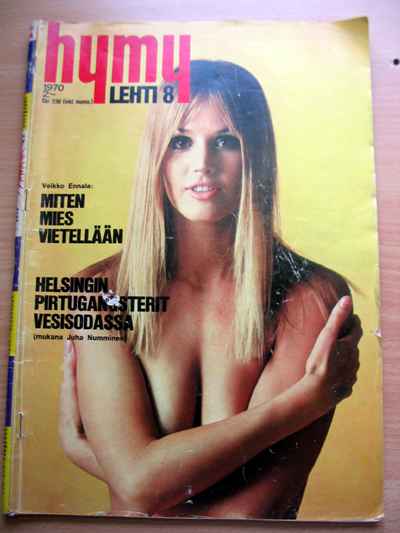


    Some examples of Veikko Ennala's texts found from the pages of this book:

    Ennala reported in sardonic tones a characteristically bacchanalic Midsummer celebration on the Yyteri Beach near the town of Pori, known for its seaside dunes and camping site. Finnish youth drunk out of their minds, I witnessed this same Midsummer inferno of Yyteri myself decades after Ennala, to notice Finns still stick to their beloved paganistic Juhannus traditions of drinking, fighting, knifing each other and drowning.

    Ennala was supposed to test some LSD and write a story, but gladly his editor prevented this, being aware of the writer's tendency to heavy melancholy and depression. Instead, a young graphic artist of Hymy took the substance, Ennala and the editor monitoring the proceedings and the former writing a story, not forgetting to duly repeat the LSD horror stories the late-60s media was full of.

    Ennala was constantly annoyed by his reputation as a lecherous old man, an "emperor of porn", for which his children got bullied at school, but only added petrol himself to the flames with his articles such as "How To Seduce A Woman", and his infamous condom test for which he announced for a female willing to do the test with him (and found one). However, among tons of angry letters, Ennala also received from the more liberal-minded readers praise for his candid articles about sexuality and willingness to write about some of those subject matters which had been so far taboo in the puritanist Finnish culture.

    There is something of a reckless exhibitionism about the way Ennala opened to all people through his writings his personal life, drunken binges with their violent hangovers, problems with his health and marriage, though all accounts were spiced with loads of sardonic self-irony and morbid humour. There's a detailed report of his ulcers for which he was hospitalised in 1974, the surgical operation that followed and his convalescence; also his later -- and terminal -- lung cancer was duly reported by Ennala. It's always embarrassing to follow people who wash their dirty laundry in public, and Ennala -- the indisputable master of this -- is no exception with "Death of My Marriage", his bitter Strindbergian account of the failure of his marriage and the reasons leading to it. (Subsequently, the ex-wife committed suicide some years later, Ennala also writing another infamous article not included in this collection.)

    One theme that followed Ennala all through his career was his constant preoccupation with all things concerning death, afterlife and the existence of God, which he pondered on and on, though considered a blasphemer by religious bigots who kept bombing the writer with letters he claimed were often surprisingly obscene: another proof to Ennala of these people's basic sexual frustrations. Despite being a thorn by the side of fanatics, revivalists and self-made "prophets" and their eschatological claims of the imminent apocalypse and such things as glossolalia ("speaking in tongues") which he openly ridiculed, Ennala was an iconoclast who kept thinking about spiritual matters thoroughly and endlessly, who couldn't exactly decide if he was a believer (of sorts), an agnostic or an atheist.

    Though it's not known if Ennala was familiar with the works of English visionary poet/artist William Blake, his own motto might well have been borrowed from Blake who wrote in his Proverbs of Hell that: "Prisons are built with stones of Law, Brothels with bricks of Religion". Veikko Ennala's attitudes about religion seem to stem from his childhood with his tyrannical teacher father (and occasional substitute priest) who regularly beat his wife and young Veikko into submission. (Somehow, these accounts make me think of those experiences depicted in his autobiographical Laterna Magica by film director Ingmar Bergman about his own strict priest father.) Veikko's religious faith was tried by father's cruel sadism and additionally, finding out about a "whoremonger priest" of his own parish, who had been found abusing young servant maids. Gladly father also had a vast library of world literature and Veikko nourished himself with the works of Edgar Allan Poe and Th. Hoffman (who also influenced Ennala's own short stories, the first of them published in a magazine when he was 11), Anatole France, André Gide, Alphons Daudet and Gustave Flaubert.

    The book is concluded by Ennala's self-penned obituary that was published in Alibi #11/1991. Despite his shortcomings, Ennala was a unique character in Finnish journalism, and his passing at the age of 68 feels now like him having left us just too early. Even though the appreciation he was looking for during his lifetime seems to have been mostly posthumous: as one proof this excellent book.

    Friday, September 14, 2007

    I Am Legend by Richard Matheson


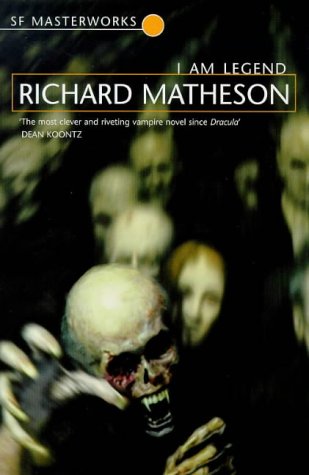
    Richard Matheson's I Am Legend (1954) is a story of one man fighting against vampires in a post-apocalypse world. After a mysterious plague has killed or turned the rest of human race into zombie-like vampires (Romero's 1968 Night of the Living Dead being heavily influenced by this book), Robert Neville -- apparently the sole survivor after having lost his wife and little daughter -- has turned his home into a fortress against which vampires try to attack every night. During daytime, though, Neville runs around Los Angeles in his station wagon, picking up supplies from deserted stores and supermarkets, and hitting stakes to the hearts of vampires unconscious in their coma-like state.

    This novel can be seen, like many other works in science fiction and horror of the same era, as another parable of the 1950s American Communist scare, but it's also a study of personal solitude and how one manages to cope with it and the changes it will bring about in one's psyche, physical and mental make-up. Like Robinson Crusoe on his island (to whom Neville actually compares himself at one point), Neville is a lonely man trying to survive in a hostile environment, his paranoia knowing no bounds but still being desperate for any contact, human or animal: his care and nurturing of a frightened stray dog at one of the novel's most emotional points being especially touching.

    Following the model of Robinson, Neville also manages to maintain his sanity through various activities keeping him busy, such as working on wooden stakes in his workshop and growing garlic in his hothouse as protection against the vampires. Or at least most of his sanity: while he "medicates" himself with heavy drinking during those lonely evenings when listening to the threatening howls of vampires outside and becomes more paranoid and hermit-like all the time, he also systematically studies the physiological basis of this strange plague (not too much unlike AIDS), and like modern man of post-Enlightenment era, approaches vampirism scientifically rather than through the superstition of ancient legends and popular books like Bram Stoker's classic Dracula, which he merely dismisses as "soap opera"-like.

    In the end Neville finds out that in the world where everyone else has turned into vampires, also "normality" is now defined in a new way: representing the "old breed" -- maybe predicting the widening generation gap becoming all the more obvious after the 1950s -- Neville is now an anachronism, a freak, the ultimate outsider, but also a feared and respected legend, as the title of the book indicates.

  • I Am Legend archive

    Film adaptations (which Matheson himself disliked, though both have now a certain cult following):


    The Last Man On Earth (1964) trailer

    More clips of The Last Man On Earth @ YouTube | The whole film @ archive.org


    Omega Man (1971) trailer

    More Omega Man clips @ YouTube

    Latest news tell there's also a forthcoming film adaptation, starring Will Smith (remember I, Robot, another rendition of a classic science fiction tale?)... I guess it's just better to stick to the original book.
  • Tuesday, September 11, 2007

    Flamongo Samoojat / Kapteeni Shiva Osa 1


    Various Artists
    Flamongo Samoojat (CD+booklet)
    FLAM - 0CDA
    limited edition of 500
    September 2007

    Tracks:

    1. Sammakko
    2. Bugari Osmond: Alisa 2007
    3. Elevators: Hesberia
    4. Bugari Ormond: Sähköjalat
    5. Past Masters: Honolulu Beat
    6. Jimi Python: Streetfighter
    7. Raisin Team: Arpeggio
    8. Polytron: New Beta
    9. Future Warriors: Bembe (Musa Basha-Mix)
    10. Mane Schimango: Mata-Intro
    11. Mane Schimango: Mutuykato Mata
    12. Tangon Taikaa: Lapin tango
    13. Muuntaja: Paha olla
    14. Välikukko
    15. Keijo Kessu: Shanghai Blues
    16. Kukka: Waiting A Jet-Plane
    17. Osmo Vallo: Pistolhot
    18. Jaakko Eino Kalevi: Pleasure Dub
    19. Frank Urban: Tramvaj
    20. Ukrets: Rake Over
    21. Elevators: Just Say Oh

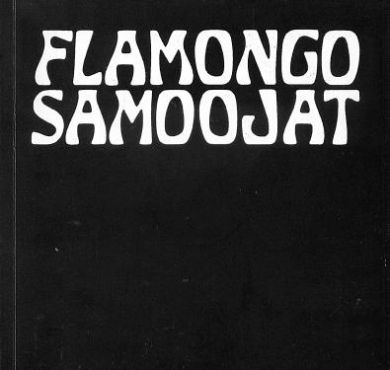
    Flamongo Samoojat CD (limited edition of 500) is the latest release from Helsinki's Flamongo label.

    With a 80-page booklet, featuring underground art from Vilunki 3000 (Op:l Bastards, And The Lefthanded, Uusi Fantasia, etc.) and previously unpublished comics from the underground legend Timo Aarniala (known for his underground comics and record sleeves for such as Suomen Talvisota 1939-1940).

    The CD has 21 tracks, among all from: Elevators, Bugari Osmond, Raisin Team, Jimi Python, Polytron, Future Warriors, Jaakko Eino Kalevi, Kukka, Muuntaja, Tangon Taikaa, Frank Urban, Osmo Vallo...


    Kapteeni Shiva Osa 1: Megatron Braineater (book + CD)
    Flamongo Sanomat erikoissarja osa 1

    232 pages, black & white.
    Flamongo Kustannus 2007
    FLAM2
    ISBN 978-952-92-2319-0

    Vilunki 3000 is also responsible for the layout and illustrations of Kapteeni Shiva Osa 1 ("Captain Shiva Part 1"), featuring a "soundtrack" CD. "The cult book" by Megatron Braineater is the first book release of Flamongo, a tale of 232 pages, starring the mystical Captain Shiva, and taking place in 2745 A.D. when "space travel is common everyday of energy economy and neo-postmodernism just dark history". There will be three more books of Captain Shiva's adventures, this first one having a look at Captain's childhood and his sexual awakening. According to NYT/Helsingin Sanomat #38/2007 behind the writer alias Megatron Braineater is one Maria Candia, age 30, who studies Comparative Literature, works as translator and has seen each episode of Star Wars for 60 times. The CD has ten tracks, featuring as its main architect DJ Candle In The WInd (a.k.a. Bob Luxor a.k.a. Zico a.k.a. Vilunki 3000), and also such artists as Ercola, Mesak, Kaukolampi-Nykänen-Puranen, Megatron, Neko Blaster and Jaakko Eino Kalevi. Originally based on Möytääng Shiva which will be out in 3474.

    *****

    There also the Flamongo Samoojat exhibition at Helsinki's Myymälä2:

    FLAMONGO SAMOOJAT 13. - 26.9.2007
    Flamongo Samoojat - Suomen musa-alamaailman moniottelijat Myymälä2:ssa 13. - 26.9.2007!

    Flamongo Samoojain merkillinen näyttely on esillä myymälä 2:ssa syyskuun aikana. Se koskettelee kesällä ilmestynyttä, suomalaisen musiikin kätkettyjä kulminaatiopisteitä ja sarjakuvan äärialueita yhdistävää kokoelmalevyä, Flamongo Samoojat. Näyttelyn huipentuma on Rosiksen legendaarisen Hohtisjengin pingispöytä, eli gallerian aukioloaikoina kaikille ilmainen hohtopingis ja ultraviolettivalon pimeys!

    Mukana myös kaikin puolin uutta science fictionia Flamongon erikoissarja Kapteeni Shivan kuvituksen käänteisfuturistisissa tunnelmissa.

    Avajaisjuhlallisuuksissa Flamongo tarjoaa musiikkia ja pingiksessä voittamisen iloa läsnäolijoille. Taiteesta vastaavat Flamongon Supersidor; voittamaton Herkules ja laittamaton Vilunilkki 3000.

  • Myymälä2 @ MySpace
  • Thursday, April 12, 2007

    Kurt Vonnegut In Memoriam


    Kurt Vonnegut (small image from the 1972 film adaptation of Slaughterhouse-Five, with Valerie Perrine)

    Kurt Vonnegut (November 11, 1922–April 11, 2007)

  • Obituary @ BBC News
  • Obituary @ CNN
  • Obituary @ Guardian Unlimited
  • Obituary @ The New York Times
  • Thursday, August 24, 2006

    Jarkko Laine In Memoriam


    Jarkko Laine (17 March 1947 - 19 August 2006)

    Finnish writer, poet and playwright Jarkko Laine has passed away. Laine became known in the late 60s as one of the pioneers in Finnish underground culture when he published in Turku with another "U" luminary, Markku Into, their provocative counterculture magazine Aamurusko. Laine also provided with Into and M.A. Numminen lyrics for the band Suomen Talvisota 1939-1970. Furthermore, Laine wrote lyrics for Rauli "Badding" Somerjoki.

    Jarkko Laine @ Wikipedia

    Jarkko Laine: Kuin ruumissaatto

    Saturday, July 22, 2006

    Kiss Me, Deadly


    (Click here if you can't see this film trailer of Kiss Me, Deadly.)

    The controversial American crime writer Mickey Spillane just died this week. Known for his extreme right-wing opinions and the violence, nihilism and misogynism of his books, the very persona of Spillane paints a bleak picture of the post-World War II American psychopathology. Though I've never read any of his books (and probably never will until I shall ever become even more cynical, jaded and vengeful than I already am), I've found Robert Aldrich's aptly hard-boiled 1955 adaptation Kiss Me, Deadly one of my favourite pieces of film noir. Reflecting the 1950s Zeitgeist of atomic paranoia and anti-Communism, and with its suitably apocalyptic climax when the nuclear(?) Pandora's box will finally be opened, this nihilistic journey of Spillane's sadistic and truly dislikeable anti-hero detective character Mike Hammer (played by Ralph Meeker) reveals something really fundamental about the mindset of this era. Va-va-voom!

    There's hardly a more suitable director for this one than Robert Aldrich (1918-1983), known for his controversial films often verging on nihilism; the star-studded war movie Dirty Dozen (1967) probably the most famous of them. Aldrich's films are often about a group of tough, masculine men trying to survive in a harsh, violent environment but he also directed melodramatic (though not less cynical) psychodramas featuring women in such works as Whatever Happened To Baby Jane? (1962), Hush... Hush, Sweet Charlotte (1964) or The Killing of Sister George (1968).

    Back to Mike Hammer, a totally different Spillane adaptation is Richard T. Heffron's I, The Jury from 1982, with slick Armand Assante as Mike Hammer and one-time Bond girl Barbara Carrera as the female protagonist. In my teenage video nasty years I actually found this one quite entertaining with all its fast-paced gory action and sordid sex scenes (the plot involves a sex clinic with prostitute-like characters offering an interesting form of "therapy"). But then, the film was scripted by Hollywood's bad boy Larry Cohen, known for such cult shockers as It's Alive, with some social agenda full of satirical picks on consumerism and corporate values, so Cohen probably well understood the garish sleaziness hiding behind Spillanean gung-ho patriotic worldview. I haven't seen this film for years, though, so I can't really assess any of its worth now.


    (Click here if you can't see this clip.)

    Incidentally, the apocalyptic destruction scene at the final climax of Kiss Me, Deadly (with its ghastly screaming sounds) makes me somehow think of the infamous slow-motion ending of Michelangelo Antonioni's Zabriskie Point (1970) where Daria Halprin's character imagines the destruction of a luxury villa, being simultaneously the symbolic demolition of the American bourgeois way of life, with all the exploding fridges and flying Wonderbread packages. While Pink Floyd's 'Come In Number 51 Your Time Is Up' (a reworking of their 'Careful With That Axe, Eugene') plays in the background -- what a beautiful scene: one of my all-time favourites, absolutely. (Too bad the film itself is considered one of Antonioni's worst.) -- Anyway, I wonder if the makers of Koyaanisqatsi ever saw this one?

    Other Mickey Spillane-related video clips @ YouTube + some with keywords 'Mike Hammer'

    Juri on Spillane:

    1 | 2 | 3