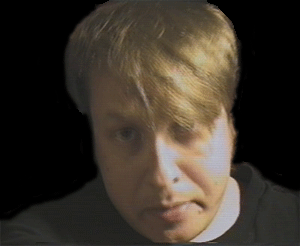
Battlestar Erotica, a brand new Kompleksi track for Valentine's Day! For all romantics and young lovers! It's only version 1.0/Beta Test, so feel free to give your comments for all the future mixes...
What he wants is not what she wants is not what he wants...
Battlestar Erotica Battlestar Erotica
Torn wedding pictures and broken plates my father and mistress having secret dates A twenty-year marriage and a sudden divorce my mother cried: "Run back to your whores!"
Battlestar Erotica Battlestar Erotica
You were a schoolboy having zits always dreaming of sophomore tits Now love makes you go from riches to rags you'd better stick to your porno mags
Women are from Venus, men are from Mars this kind of stuff drives me drinking in bars Women are from Venus, men are from Mars this kind of stuff drives me drinking in bars
Will love ever be stronger than fear? She told me: "Don't come near" Wanted to take her over the border she gave me a restraining order
Battlestar Erotica Battlestar Erotica
Nothing was enough for Mrs. Rice her husband didn't have enough size Now she's got a vibrating toy that brings her so much joy
Women are from Venus, men are from Mars this kind of stuff drives me drinking in bars Women are from Venus, men are from Mars this kind of stuff drives me drinking in bars
Women are from Venus, men are from Mars This kind of stuff drives me drinking in bars Women are from Venus, men are from Mars This kind of stuff drives me drinking in bars
Today it's been exactly forty years since 'Strawberry Fields Forever', the most adventurous single of The Beatles, written by John Lennon (and also being my own personal favourite in the band's all recorded works), was published in the UK (in America it came out a couple of days later, 17 February 1967).
Backed by Paul McCartney's 'Penny Lane', this "double A-side" single gave some foretaste of what was to come with the band's June 1967 album Sergeant Pepper's Lonely Hearts Band, which is considered a landmark in the development of pop music in general, though many Beatles fans still argue whether as complete albums Rubber Soul (1965) or Revolver (1966) are even better ones. (Personally, I think none of these albums are totally immaculate works, each having their uneven parts and maybe some not-that-memorable songs alongside some undeniably classic tunes, so instead of naming just one album over the others, I'd just vaguely choose the band's general creative output somewhere in between 1965 and 1967 their best, of representing their "Golden Era".)
An important musical reference to The Beatles in these days was musique concrète; especially Paul McCartney was interested in the works of Karlheinz Stockhausen, and in 1968 Lennon would create, with assistance from Yoko Ono and George Harrison, his own (in)famous concrète piece 'Revolution No. 9' for the band's White Album. ('Carnival of Light', another experimental piece from the band still remains unpublished.) The Beatles and their producer George Martin had already experimented with the possibilities of "tape music" when creating for Revolver'Tomorrow Never Knows' (my second favourite Beatles track, probably), a baffling but also rhythmically grooving piece based on the adaptation of "The Tibetan Book of the Dead" in a psychedelic tripping guide by Timothy Leary et al. The sonic achievements of the band and Martin were not less remarkable when remembering Abbey Road's studio still used four-track recording techniques, already primitive in comparison to Stateside studios having 16-track recording consoles at their use.
Starting with an an eerie flute-like mellotron phrase intro on the left channel and Lennon launching his drowsy-sounding reading, 'Strawberry Fields Forever' is sound-wise like a whole symphony condensed into four minutes. Accompanied by Ringo Starr's concise martial drumming breaks, a mêlée of pseudo-Indian music played with such instruments as swarmandel, trumpets, sawing cellos, guitars and bass stereo-panning in between the channels, this is rather a collage of sounds and music carefully assembled together in studio than any straightforward band "song". The eerie atmosphere in Lennon's vocals is not lessened by the fact that the released version of 'SFF' is put together from two different takes of the song, both in different tempos and keys, carefully joined as one by George Martin and recording engineer Geoff Emerick with elaborate tape playback speed changes, also pitch-shifting the vocals in the process.
The song which John Lennon wrote in Almeria, Spain -- while filming How I Won The War in late 1966 -- is lyrically as if a kaleidoscopic Zen riddle, full of psychedelic non sequiturs; a sort of existential search for an elusive identity, when reality is just a game through which we wander with our eyes closed, no one sharing exactly the same wavelength (or in Lennon's words, "my tree"), and all we see being but an illusion, though in the end it may all turn out well, with all "working out" -- so why worry? As Hassan-i-Sabah allegedly put it in 1124: "Nothing is real, everything is permitted". All said, your own interpretation of this song is as good as mine.
What makes this particular piece of music -- probably ancient history for today's hipper-than-thou clubbers, fanboys and DJs chasing after those latest rare pieces of vinyl of dubstep, grime and [here the name of any other fashionable here-today-gone-tomorrow genre of dance music] -- still relevant for the jaded "heard-it-all" ears of 2007, then? Technically, 'SFF' is one of the prime examples of pop's early era of "studio-as-an-instrument", paving way for all the later innovations in the techniques of electronic music and sampling; for such genres as dub reggae, disco, hip-hop, electro, techno/house, you-name-it, and the whole remixing culture. Of course, The Beatles were not the originators of these techniques but when popularizing these with their works, they influenced just through the sheer volume of their international mass appeal countless musicians and record producers around the world. It's an old cliché that if The Beatles had come into existence in our own days, they would have eagerly embraced the possibilities of synthesizers (they did include the Moog synth on their Abbey Road album of 1969), samplers and modern music software. Instead, creating their works in technically far less advanced 60s, they had to rely on the studio techniques of their own day, still very primitive from our post-Pro Tools perspective, and invent their own ways as they went along.
As to the band's cultural influence for the younger generation, today it's easy to deride The Beatles. When the nihilist mindset of such genres as goth, industrial and metal have made such dark subject matters as suicide, (mass) murder and self-mutilation appear "cool" and even appealing, the band and their naive era of flower power and universal love just appear laughable for today's "faster-harder-louder-darker" kids. And while The Beatles still keep making regular appearances on the covers of such "dadrock" magazines as Mojo and Uncut, assuring sales among the members of older pop generations getting nearer their pension days, it's just totally uncool to confess even any distant admiration for the band; a fact further confirmed by the band's record label EMI and their milking The Beatles' output to death with such cynical compilations as The Beatles 1 of 2000. (Love, the recent "mash-up" album of the band's songs -- "remixed" by combining together elements from different Beatles songs originally having nothing to do with each other -- could at its best called just "interesting", thinly disguising the fact of it being basically only another "Best of" record. Momus, a cult artist and an avid cultural commentator in his own right, was not as merciful as your present writer, though, instantly dismissing Love in his blog as "remasturbation".)
Anyway, even if we discount all that cultural burden created both by the nostalgia market and the drastically changed tastes and values in music and culture since the 60s, it's still hard to assess The Beatles as "just another" band or musical artist than as a wide cross-cultural "phenomenon"; the approach which probably does gross injustice to everyone involved.
It seems the 1960s were very different times compared to ours: the times when people still honestly believed in utopias, actually thinking that such things as the "world revolution" (or for those less politically inclined, not less than "heaven on Earth") were on their way. Despite the war in Vietnam, racial struggles or the threat of imminent nuclear war, for a lot of people everything just seemed to point to that direction: music, fashion, politics and the prevalence of mind-altering chemicals, opening new and unforeseen vistas. Experimentalism was considered a virtue everywhere. It all faded away very soon as the general disillusion set in and the world turned from day-glo to something even darker and grimmer than it had been in the monochrome pre-halcyon days of the 1950s and early 60s. Post-9/11, and it seems we are returning all the time closer to the dark ages of the medieval world of bigotry, zealotism, political and economical feudalism, even torture. More than ever, we must rediscover the seeds of hope, humanity and spiritual rebirth. Examine such works as 'Strawberry Fields Forever' -- really in some sphere of its own; outside of time, any time -- and you will constantly find those there.
Let me take you down, cause I'm going to Strawberry Fields Nothing is real And nothing to get hung about Strawberry Fields forever
Living is easy with eyes closed Misunderstanding all you see It's getting hard to be someone, but it all works out It doesn't matter much to me
Let me take you down, cause I'm going to Strawberry Fields Nothing is real And nothing to get hung about Strawberry Fields forever
No one, I think, is in my tree I mean, it must be high or low That is, you can't, you know, tune in, but it's alright That is, I think it's not too bad
Let me take you down, cause I'm going to Strawberry Fields Nothing is real And nothing to get hung about Strawberry Fields forever
Always, no, sometimes, think it's me But, you know, I know when it's a dream I think, er, no, I mean, er, yes, but it's all wrong That is, I think I disagree
Let me take you down, 'cause I'm going to Strawberry Fields Nothing is real And nothing to get hung about Strawberry Fields forever Strawberry Fields forever Strawberry Fields forever
I'm a ghost at noon I'm a ghost at noon I'm a ghost at noon
I'm a ghost at noon hidden in plainsight I'm walking on the moon a sleepwalker at daylight
I'm a ghost at noon blink, and you'll miss me I stay in my cocoon you'll never absorb me
I'm a demon at noon and I bear shame I fall into a swoon no one knows my name
As I stroll down this street asphalt burns beneath my feet People think I'm so strange but I'm just out of their range
I stay in my shell I could be that wall as well I don't know if I'm really here or if I'm someone else's dreams Please, don't come near I'm splitting at my seams
The clocks stop ticking in the town where time stands still I'm a mask concealing the real Safe from prying eyes I feel unreal
I'm a ghost in the deserted garden I can feel their stares harden Chaotic non-existence looms breathing in exhaust fumes
I feel like a dead in this town all the people put me down I hang my head, avoid people's eyes my mind is paralyzed
What's behind the broken mirror? I am everywhere and nowhere My heart is singing those voices in the dark and I can't disembark
I'm a ghost at noon you will never understand me Permanently out of tune why can't you see?
I'm a ghost at noon avoiding people's hungry eyes It's going to happen soon sunlight hurts my eyes
'Kompleksi' (by Kompleksi vs Club Telex Noise Ensemble; originally titled as 'CTNE'). An eclectro-dub psychodrama. Warning: not for the faint-hearted.
Shrinkwrapped soul kept in the freezer Brigid the Frigid she's no teaser
Frozen heart stopped at the start Antiseptic, clean can't be seen
Always immaculate, always absentee please don't leave spots in me Stains on my floor close the door
It's so hygienic shining surface Collector's item never left its package
Kompleksi Kompleksi Kompleksi ...
The fear of being at the mercy of irrational the fear of losing control
So you freeze and you put on a mask under which no one can see or hear you
Saving faces and losing souls you're an actor and the audience is hostile You would like to scream but all the words get muffled all the time before they even leave your mouth
Talking in fragmented sentences, confused there are cracks on your concrete shelter
Critics giving their own comments on pHinn's song lyrics
[Warning: the following one is a totally subjective, self-obsessed rant (probably familiar to people who keep reading this blog for morbid reasons of their own). If you don't like that type, skipping it now is warmly recommended.]
"A song is like a dream, and you try to make it come true. They're like strange countries you have to enter. You can write a song anywhere, in a railroad compartment, on a boat, on horseback – it helps to be moving. Sometimes people who have the greatest talent for writing songs never write any because they are not moving." - Bob Dylan: Chronicles Volume One, p. 165
What Dylan says here can sound oversimplified, but as for me, I've found it very true. Potential phrases for lyrics come to me any time when I get up from my sofa and leave the apartment, am walking on the street, on my way to eat or back home, and the hardest thing is to write these words down before I forget them. They come and go on their own will, I can't force them, and the most important thing is to catch them on paper before they vanish forever.
I guess I've got some sort of attention deficit disorder. There's no other way to explain my short attention span otherwise. But our culture doesn't exactly do its best to make us learn to be more patient, does it? It's a culture of soundbites, TV commercials and music videos with rapid edits; talking and thinking in shorthand. Fast food for thought, anything not to get bored. The trick, I guess, is trying to accumulate these little pieces somehow and try to make something larger out of them in time. That's how I write my own lyrics anyway.
I collect these little phrases (which more often than not have nothing to do with each other) in my notebook; these tiny fragments and expressions coming out of the blue, without me even understanding what the hell they are all about. Then, when I start writing new lyrics, I browse through this notebook of mine filled with little fragments, phrases and separate couplets to find if there’s anything useful for this particular song. It's like a process of alchemy of trying to create something out of this disjointed heap of verbal junk.
As far as the style goes, I think my favourite lyrics always retain an element of unexplainable, a subconscious element, like in the movies of Buñuel or Lynch. Even though superficially it might make little sense, you feel you are really struck by something, even if you don't exactly know what. At its best it may stay to haunt you.
I also like the short "telegram" style of lyrics where things are put brief and the listener is supposed to fill the gaps in his/her own head. It's a style of lyrical shorthand, I think. Some examples might be Marc Bolan of T-Rex's lyrics, Sigue Sigue Sputnik's 'Love Missile F1-11' (which we covered with Kompleksi) or Syd Barrett at his most elliptical and enigmatic. There are so many ways to get the end result, but these are the styles I like the best at the moment.
One thing you have to understand is that my style is more based on instinct than on technique. A lot of my work – whether it was text or images - is created by acting on impulse, without any premeditation. As if creating first some single pieces of a jigsaw puzzle, only then trying to find a way to make them fit together somehow. Somehow that way of working is a form of meditation too. Surrealism made me understand that everything is in fact connected (or interconnected) even though single pieces would seemingly have nothing to do with each other. We create totally new associations as we go along.
I’m a great believer in intuitive, "natural" technique. All learning is basically an imitative process. For all my life I've lived in this culture of ours: soaked in and absorbed words, catchphrases, buzzwords, images, melodies, rhythms, compositions; all transmitting a sort of unworded understanding on how relations between people and things work. I still don't know which is more important: consciously studying or just absorbing everything around you as you go on.
I can't read notes but I think I've got some sort of intuitive understanding of music and rhythm, learned only by years of listening. And if I can't just create my own music exactly "by the book", to hell with that (something which has probably created a certain amount of frustration in Mike Not - who's more professional in his musical approach - as we have created our own stuff). Just don't confuse my head with numbers or having to count beats. I was never good at maths but I somehow liked geometry because it was visual; I could see the numerical connections in my eyes and in that way understand them. - In a way, this takes us to synaesthesia, the mixing of senses (e.g. sounds as colours, geometrical patterns, etc.) Bach's music, for example, I can hear/see as cosmic constellations of stars (basically, complex mathematical equations; if only my maths classes at school would have been based on Brandenburg Concertos!)
All in all, I suppose it is only some sort of gut feeling on which it is all based with me: a sort of magic carpet which I can ride only as long as I don't start pondering too much about the technique which keeps it in the air. If I do, only then it is bound to fall.
As far as music theory goes, I'm aware of being somewhat an idiot savant. I barely understand such things as diatonic and pentatonic scales (the latter is a "Chinese-sounding" thing, played with black keys on keyboard, isn't it?), or telling twelve-bar blues from waltz (stuff like 4/4, 5/4, etc.), or Schönberg's twelve-tone system, or atonality ("horror film" sounds, sounding like a mental patient fiddling around with instruments, aren't they?), but I'm eternally grateful to my father who always played classical music at our home when I was a child. These were a major part of my unformal musical education, and I'm still familiar with how a certain piece of music goes, even though I couldn't exactly name it or its composer.
Time to return back to earth. As to the more practical and day-to-day concerns of pursuing this trade, often I worry if my musical ambitions are just a pipe dream after all. For all my life I've tripped, stumbled and fallen to find something that would be "me", gotten exited about various things only to desert them sooner or later (or to be more precise, they have deserted me).
So, I couldn't have helped thinking if it all only ends up like thousands of other hopefuls who tried their luck in music business (and face it, business it is in the end of the day, whatever the pretensions of "art" or doing it "just for the love of music") and never came to anything. If it is only hubris on my part, and "the harder they come, the harder they fall". I do my utmost not to think about that. Whatever, me and Mike Not are not becoming any younger, and it's better to try now than to spend our old days regretting about the lost lifetimes. From the feedback we’ve received from around the world so far, at least we think we are on the right track.
I believe work itself is its own justification. "Work is the thing, work is everything", Andy Warhol said. I think with Mike Not we have created something worthwhile, a small body of work already, which will last whether it was a big "hit" or not. Something I'm sure people will find sooner or later –- one only has to have some faith, really.
When once asked who else he would like to be if he wasn't Andy Warhol, Warhol answered: "I would like to be Donald Duck". And why not. Our feathered hero keeps on trying, pushing, however hard the knocks. I will never forget this Donald Duck comics I read as a kid where Donald fails in a running competition only to be reminded by his little nephews, wise and mature for their age, that it is not the most important thing to win but that you do your best.
I've searched in the depths of my mind to find The answer to life is be kind not blind Show love above all And your life won't be so hard no more
People may fight and make war and roar The answer to life is make love, no war Show love above all And your life won't be so hard no more
I go with the gang called the Vegetable Men I smash up the hippies whenever I can They get on my nerves with their flowers and love They sit in Soho while I'm in a pub Eating minced tarts, playing my darts I see if there's any crumpet near I don't want nothing more than my beer
I go with the gang called the Vegetable Men I like to kick cops whenever I can They say that I weren't too bright at my school But if I can beat cops I can be no fool Breaking their bones, I'm chucking 'round stones I'm spreading 'round fear and hate I don't want nothing more than my beer
Breaking their bones, I'm chucking 'round stones I'm spreading 'round fear and hate I don't want nothing more than my beer
-Blues Section: "Answer To Life" (lyrics: Jim Pembroke)
I was thirty-seven You were seventeen You were half my age The youth I’d never seen Unlikely people meeting in a dream Heaven only knows the way it should have been
Here today my tomorrow Where you lead I will follow All that kissing No passion missing Come live with me Kiss the boys goodbye
Dinner parties followed And all my age implies My friends began to talk I began to realise If half the things they say Are quarter true of me Then how can I eclipse the youth You gave to set me free
There was something in your smile That was hard to reconcile The time had come to testify to reason Though years will not erase Remembrance of those days At least there’s no submission to heart's treason
Here today my tomorrow No more shame only sorrow All that kissing There’s something missing Come live with me Kiss the boys goodbye
Now there’s nothing left to cry for And there’s nowhere left to go Just another hopeless fight But how were we to know The strong are sometimes wrong But the weak are never free The choice we made we can't evade Don’t try to follow me
Here today my tomorrow No more pain only sorrow All that kissing There’s something missing Come live with me Kiss the boys goodbye Come live with me Kiss the boys goodbye
Ugly guys with beautiful girls. You always know what the story is. Beautiful girls with ugly guys. What do they take us for anyway? What do they take us for anyway?
Ugly guys with beautiful girls. Ugly guys with beautiful girls.
As they walk down the street arm in arm, I see them and once again feel the need to ask myself the question, the question that has weighed heavily on me of late. How is it possible that a guy and a girl so dissimilar in physical appearance, there being such a disparity in how attractive each is, be nonetheless in what would appear to be some sort of relationship?
It ain't done with smoke and mirrors. It ain't done with smoke and mirrors. It ain't done with smoke and mirrors.
Ugly guys with beautiful girls. Ugly guys with beautiful girls. Ugly guys with beautiful girls.
How do we explain this? An attraction of opposites? No, that theory has been refuted by many experts in the fields of human psychology. A much greater attraction seems to come from one more similar to oneself. Personality, perhaps? Without intending to sound judgmental, I would say that he doesn't look like what was once called a "live wire" or "the life of the party". He appears rather expressionless. His movements are stiff and even awkward. Perhaps he is a person of some intellect -- an expert in science, the arts, political theory. No, I think not. See how well-tailored his clothes are, how well cut his hair is.
It ain't done with smoke and mirrors. It ain't done with smoke and mirrors. It ain't done with smoke and mirrors.
Ugly guys with beautiful girls. Ugly guys with beautiful girls. Ugly guys with beautiful girls.
I must confess to you, my listeners, that I have been a little less than honest in pretending I had no answers to my previous questions. You see, I lost someone very dear to me, someone very beautiful, to someone much like him.
Ah, you ask, surely there must have been other areas where you were deficient and he was not. No, I don't believe so. My shortcomings were of an economic nature. He was rich. I was not.
You see, I underestimated the appeal to her of things -- imported things on wheels, large things with manicured lawns and Olympic swimming pools, things to wear around her neck that would glisten in the night light. Things. Still, I am not bitter. Rather, I am an observer who saw firsthand how life may not be fair. Would things have turned out differently between me and her had I moved up the corporate ladder quicker, been born of more noble stock, or done better on one of our journeys to Las Vegas? Perhaps. In fact, I'm certain of it. Things would have turned out differently between me and her. I know this now. It ain't done with smoke and mirrors.
Ugly guys with beautiful girls. You always know what the story is. - The Sparks (a.k.a. Ron Mael & Russell Mael)